
Canadian winters demand reliable heating, especially when you live off-grid. For Greg and Katie of @ThisOffGridLife, staying warm in the Northern British Columbia wilderness means finding an energy-efficient heating solution that works with their solar-powered system.
After building their first off-grid home on 10 acres, the couple began a new adventure on 300 acres of rugged Canadian wilderness. With a cabin to heat, farm animals to care for and winter approaching, they needed a reliable way to maintain comfortable indoor temperatures without depending entirely on their wood stove.
Their solution was the MRCOOL® DIY® 18K Hyper Heat Mini-Split, an energy-efficient heating and cooling system designed for cold climates.
And this wasn't their first experience with MRCOOL. It was their third installation at their third off-grid property.
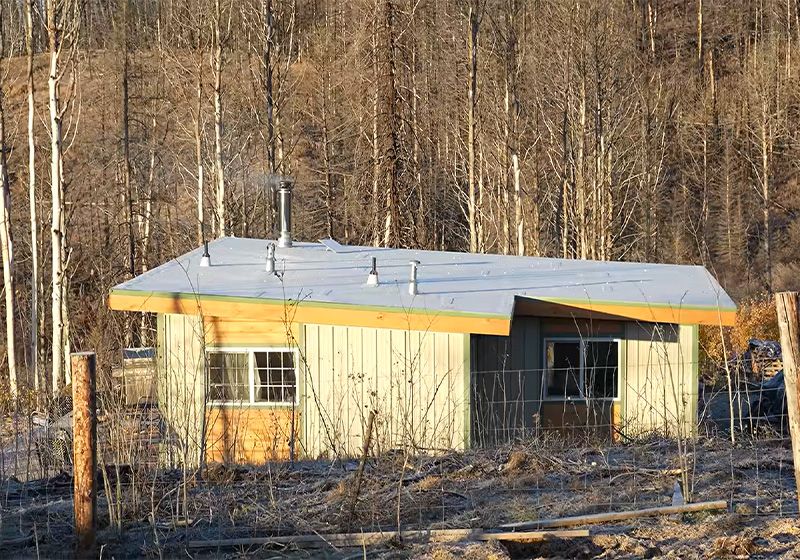
Can a Mini-Split Heat an Off-Grid Cabin in Canada?
A properly sized cold-climate mini-split can heat an off-grid cabin in Canada when paired with an electrical system capable of supporting its power requirements.
The MRCOOL® DIY® Hyper Heat Mini-Split uses DC Inverter technology to provide efficient heating in freezing temperatures. It can also operate with a compatible solar inverter and battery storage system.
Greg and Katie installed an 18,000 BTU Hyper Heat system in their Northern British Columbia cabin. During an overnight test, they maintained an indoor temperature of 70°F (21°C) while estimating that the system consumed approximately 35% of their available battery capacity.
Their experience demonstrates how a cold-climate heat pump can support off-grid comfort, although actual performance depends on outdoor temperatures, insulation, system sizing and available electricity.
Why Is Heating an Off-Grid Cabin in Canada Challenging?
As frost covers the grass and farm animals emerge from their warm barn, Greg and Katie know winter isn't far away.
But before the extreme cold arrives, they must navigate the unpredictable shoulder season.
During the transition between summer and winter, temperatures can fluctuate significantly throughout the day. For homeowners relying on wood-burning stoves, maintaining consistent indoor comfort can be challenging.
"I'm really excited about this because it's the shoulder season right now, so running the wood stove is just a little bit too warm but if we don't run the wood stove, it's just a little bit cold in the house," Katie explained.
Rather than constantly tending a fire or dealing with uncomfortable temperature swings, the couple wanted a more flexible heating solution.
The MRCOOL® DIY® Hyper Heat provides adjustable heating for chilly mornings and evenings, along with air conditioning when summer temperatures return.
"I think this is going to be perfect for our little cabin and then in the summer, when we need to run AC, we can keep ourselves cool in there as well," Katie said.
With only a few hours of daylight remaining, the couple began installing their new system.
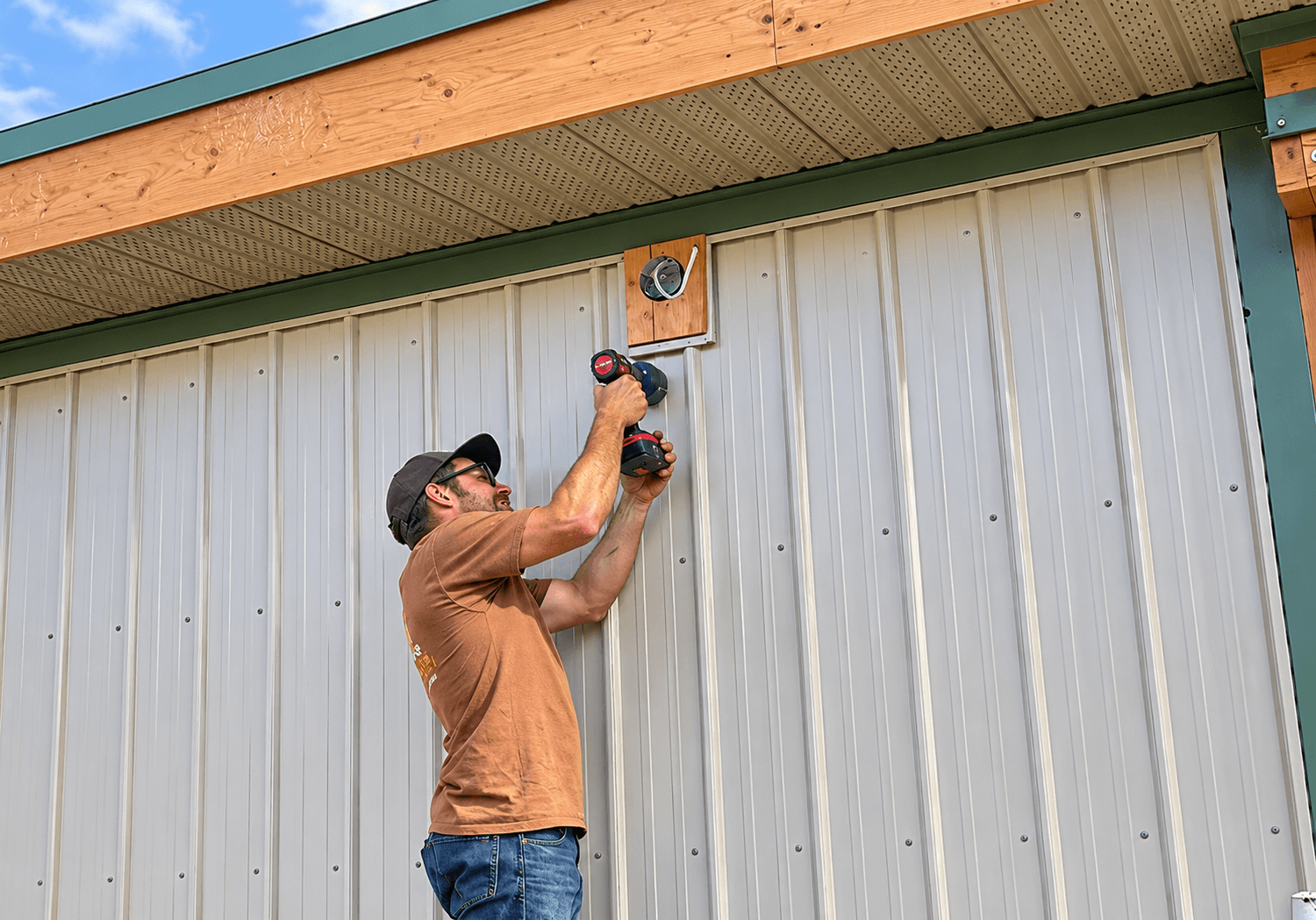
Installing a MRCOOL® DIY® Mini-Split in a Remote Cabin
When the nearest HVAC professional is hours away, installation simplicity can make a significant difference.
Fortunately, Greg and Katie were already familiar with the MRCOOL® DIY® installation process after completing two previous installations.
"This is the third time we have installed a MRCOOL and they are super easy to do," Greg said.
One of the system's defining features is its patented, pre-charged Quick Connect® line set technology, which eliminates conventional refrigerant line vacuuming and charging during a standard installation.
Unlike traditional mini-splits that typically require specialized HVAC equipment and professional refrigerant handling, the MRCOOL® DIY® system features factory-prepared refrigerant connections designed to simplify installation.
Greg explained why this innovation is especially valuable for remote homeowners.
"The reason why this is a DIY® Mini-Split is because these have pre-charged lines," he explained. "And that is especially good for us because we are in the middle of nowhere and it would be tough to get anyone to come out here, so this is hugely beneficial for very rural people."
For homeowners in remote locations, Quick Connect® technology can eliminate a major installation obstacle by reducing the need for specialized HVAC equipment and on-site refrigerant handling.
MRCOOL® recommends using a licensed electrician for electrical work. All installations must comply with applicable codes and requirements.
A Clean Installation That Complements the Cabin
Performance wasn't the couple's only priority. They also wanted their new mini-split to blend into the cabin's exterior.
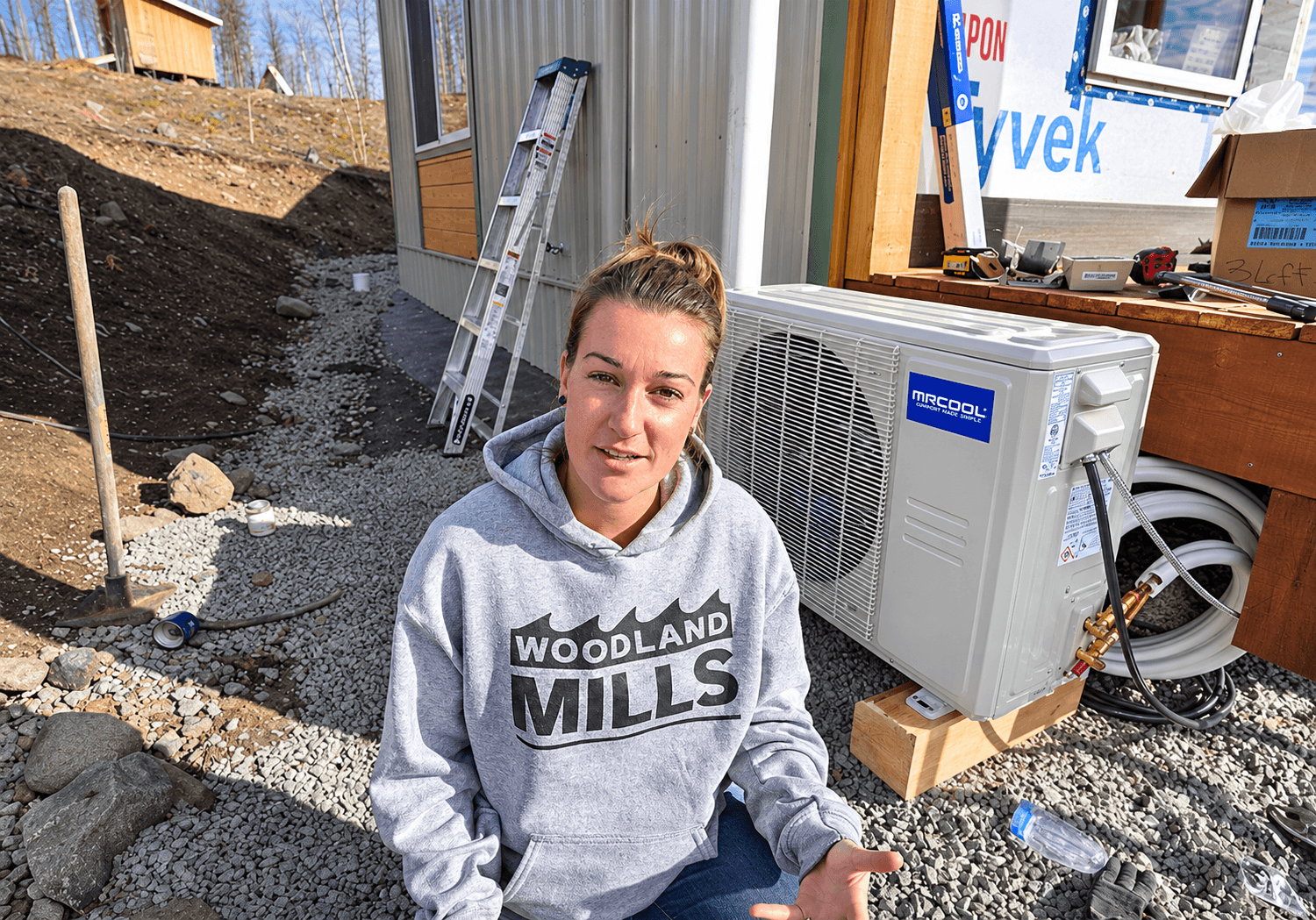
During a previous installation, Greg and Katie built a custom wooden cover to conceal the refrigerant line set. This time, they chose MRCOOL line set covers for a simpler, more streamlined finish.
"We went with tan and it matches very closely to our siding," Katie explained.
The result was a clean, finished appearance without the additional work of constructing a custom cover.
How Cold Can a MRCOOL® DIY® Hyper Heat Mini-Split Operate?
One of the most common questions about cold-climate heat pumps is whether they can provide dependable heating when outdoor temperatures fall below freezing.
Traditional heat pumps can lose heating capacity and efficiency as temperatures drop. Modern cold-climate systems, however, are engineered to operate in more demanding winter conditions.
The MRCOOL® DIY® Hyper Heat Mini-Split is designed for heating in extremely cold outdoor temperatures, with the operating limit dependent on the specific model.
Advanced DC Inverter technology adjusts compressor output to match heating demand, helping maintain consistent indoor temperatures while optimizing energy consumption.
For Greg and Katie, who experience severe Canadian winters, cold-weather performance was a major consideration.
Northern British Columbia can experience temperatures approaching -40°F (-40°C), so the couple plans to keep their wood stove available for supplemental heating during extreme conditions.
This combination gives them greater flexibility. Their Hyper Heat can handle everyday heating demands within its operating range, while the wood stove provides an additional heat source when necessary.
For off-grid homeowners, having multiple heating options can be particularly valuable.
What the Homeowners Reported:
Performance detail | Greg and Katie's installation |
Installed system | MRCOOL® DIY® 18K Hyper Heat |
Nominal capacity class | 18,000 BTU/h |
Observed outdoor low | 18°F (-8°C) |
Indoor temperature setting | 70°F (21°C) |
Reported battery consumption | Approximately 35% |
Supplemental heating | Wood-burning stove |
Installation feature | Pre-charged Quick Connect® line sets |
These results reflect one homeowner installation. Battery consumption is an estimate and will vary based on system capacity, weather conditions, insulation and heating demand.
How Much Solar Battery Power Does a Mini-Split Use Overnight?
For off-grid homeowners, energy consumption is just as important as heating performance.
Unlike grid-connected households, Greg and Katie depend on their solar panels and battery storage to power their home. Every appliance draws from their available energy supply, making efficient operation essential.
To evaluate their new MRCOOL® Hyper Heat, they conducted an overnight heating test.
The couple set their thermostat to 70°F (21°C) and left the mini-split running overnight. The following morning, they checked their battery monitoring app to evaluate energy consumption.
After several days of heating their cabin exclusively with the mini-split, they were pleased with the results.
"We are estimating it's been (using) about 35% of our battery, and we have a pretty small off-grid system,” shared Katie. “We have plenty of power left over in the morning when we wake up."
For a household relying on a relatively small off-grid power system, maintaining a warm cabin while preserving battery capacity was an encouraging outcome.
However, the percentage of battery capacity used is not a universal measure of mini-split efficiency. Actual electricity consumption depends on outdoor temperature, insulation, heating load, thermostat settings and usable battery capacity.
Greg and Katie's experience illustrates how an appropriately sized heat pump can fit into an off-grid lifestyle when supported by a compatible power system.
What Should You Check Before Running a Mini-Split Off-Grid?
A mini-split powered by an off-grid solar and battery system requires an electrical system capable of meeting its operating demands.
Before installing a mini-split in an off-grid cabin, homeowners should evaluate:
- Solar panel capacity: How much electricity the system can generate, particularly during shorter winter days.
- Usable battery storage: How much energy is available for overnight heating and periods of limited sunlight.
- Inverter output: Whether the inverter can safely support the mini-split's electrical requirements.
- Cabin insulation: How effectively the building retains heat and limits energy loss.
- Heating demand: How much energy the system will need during typical and extreme winter conditions.
Because heating requirements often increase as outdoor temperatures fall, winter battery capacity is particularly important.
Homeowners should review the specific mini-split's electrical ratings and consult a qualified solar installer to determine whether their off-grid system can safely support heating and cooling demands.
Can You Control an Off-Grid Mini-Split Remotely?
For Greg and Katie, MRCOOL technology has provided benefits beyond their current cabin.
When selling their previous off-grid home, the couple had already relocated to their new property. Rather than leaving the house without climate control, they used their MRCOOL system's smart features to monitor and manage temperatures remotely.
"This is really awesome because when we were selling our house, we had already moved here and had the AC connected, and we just left it on. I could monitor it. I had it on a schedule and I could check and make sure everything was working perfectly," Katie recalled.
With compatible smart controls and an internet connection, MRCOOL mini-split owners can adjust temperatures, create schedules and monitor their systems using a compatible smartphone app.
The feature was especially helpful when prospective buyers toured their previous property.
"Because this unit is so energy efficient, we could have the air conditioning blasting on our last off-grid place so when the realtor brought people around to come see the house, they came inside to an off-grid home that was cold-cold on the inside," Greg explained.
For homeowners managing remote cabins, vacation properties or unoccupied homes, connected climate control offers added convenience and peace of mind.
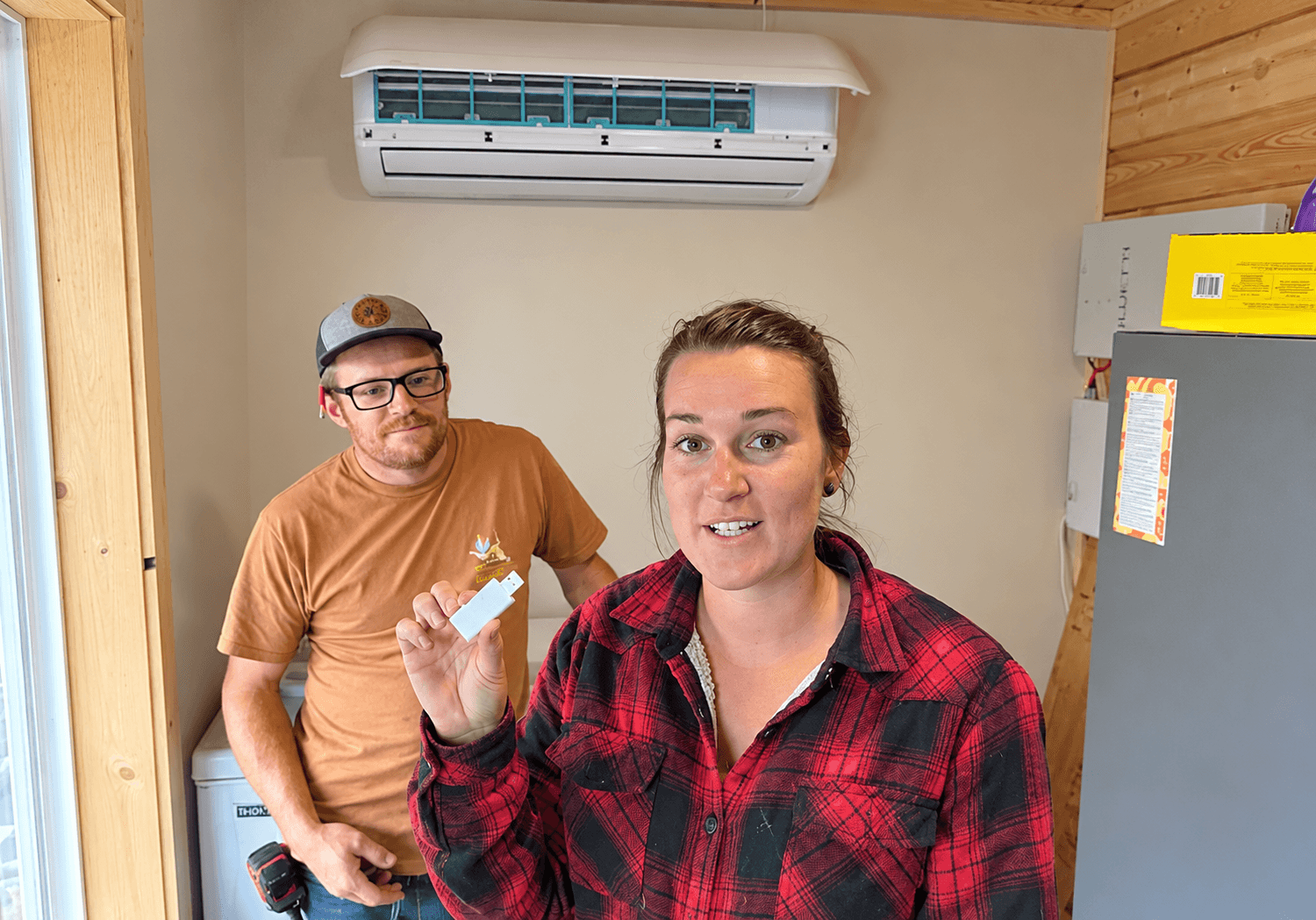
Can a Cold-Climate Mini-Split Reduce Wood Stove Use?
Life on a 300-acre off-grid homestead comes with plenty of responsibilities, especially as winter approaches.
Between caring for animals, maintaining their property and developing their new homestead, Greg and Katie have had little time to prepare their winter firewood supply.
Fortunately, their new MRCOOL® Hyper Heat has helped reduce their immediate reliance on the wood stove.
"We haven't even started thinking about firewood for the season yet, and this [MRCOOL unit] is saving our butt, really," Katie said. "We haven't had to do our firewood, and the coldest it's gotten so far this season is 18°F (-8°C) overnight. It's been pretty frosty and winter is approaching quickly."
Even with overnight temperatures reaching approximately 18°F (-8°C), the couple has maintained a comfortable cabin using their mini-split.
Rather than replacing their wood stove entirely, they can rely on the Hyper Heat during milder conditions and use wood heat when temperatures become more extreme.
This flexibility allows them to reduce the time spent tending fires while maintaining a backup heating option for severe winter weather.
And when summer arrives, that same heat pump provides air conditioning, eliminating the need for a separate cooling system.
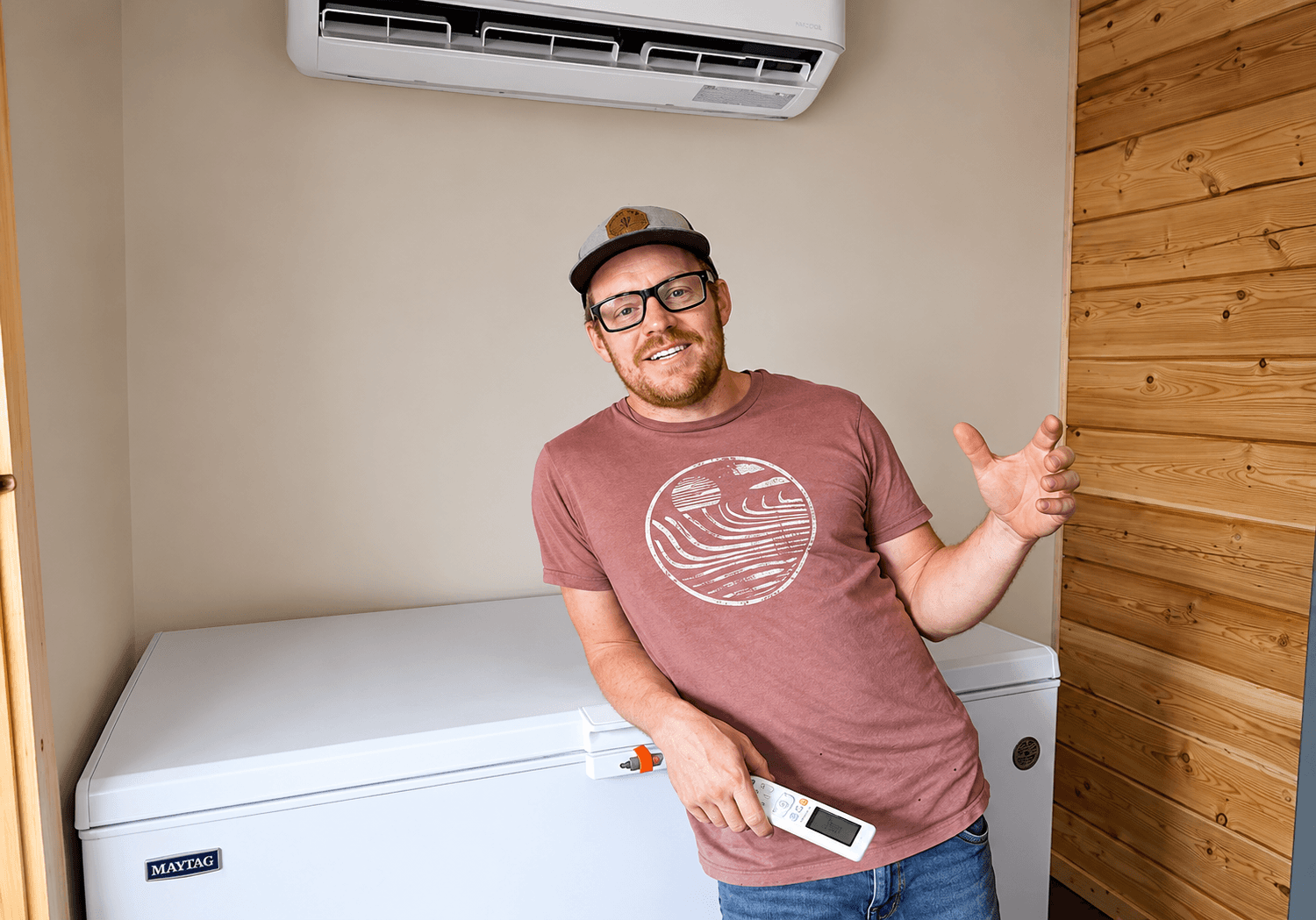
Energy-Efficient Heating and Cooling for Off-Grid Living
From freezing Canadian mornings to warm summer afternoons, Greg and Katie need a heating and cooling solution that adapts to their off-grid lifestyle.
Their experience with the MRCOOL® DIY® 18K Hyper Heat Mini-Split demonstrates how cold-climate heat pump technology can make remote living more comfortable and convenient.
With energy-efficient DC Inverter technology, simplified installation through pre-charged Quick Connect® line sets and compatible smart controls, the system offers a practical alternative to relying exclusively on traditional heating methods.
After installing MRCOOL systems at three different off-grid properties, Greg and Katie have firsthand experience with the benefits.
"If you're looking to reduce your winter heating cost or add an efficient heating and cooling option, MRCOOL is definitely worth checking out," Katie said. "It will provide reliable heat in the winter and nice, cool air conditioning in the warmer months."
Ready to Heat Your Off-Grid Cabin More Efficiently?
Whether you're heating a remote cabin, upgrading your homestead or exploring solar-powered climate control, the MRCOOL® DIY® Hyper Heat Mini-Split delivers versatile heating and cooling designed for demanding climates.
Explore the MRCOOL® DIY® Hyper Heat Mini-Split to discover how cold-climate performance, energy-efficient inverter technology and simplified installation can bring year-round comfort to your off-grid property.
Frequently Asked Questions
Can a MRCOOL® DIY® Hyper Heat Mini-Split run on solar power?
The MRCOOL® DIY® Hyper Heat can operate with a properly sized off-grid solar power system, compatible inverter and sufficient battery storage. Actual energy consumption depends on outdoor temperatures, heating demand, insulation and system capacity.
Can I install a MRCOOL® DIY® Hyper Heat Mini-Split myself?
The MRCOOL® DIY® Hyper Heat features patented, pre-charged Quick Connect® line sets that eliminate conventional refrigerant line vacuuming and charging during a standard installation. This simplifies the process for homeowners, particularly in remote locations. Electrical work must comply with applicable codes, and MRCOOL® recommends using a licensed electrician.
Can a MRCOOL® DIY® Hyper Heat replace a wood stove?
Depending on the home's heating load and local climate, the MRCOOL® DIY® Hyper Heat may serve as a primary heating source. However, supplemental heating is recommended when outdoor temperatures may fall below the system's operating range or when available off-grid electricity is insufficient.
Does the MRCOOL® DIY® Hyper Heat provide air conditioning?
The MRCOOL® DIY® Hyper Heat provides both heating and air conditioning, making it a year-round comfort solution for cabins, off-grid homes and traditional residences.
How much electricity does a MRCOOL® DIY® Hyper Heat use?
Electricity consumption varies based on system capacity, outdoor temperatures, insulation and heating demand. DC Inverter technology adjusts compressor output to match conditions rather than continuously operating at maximum capacity. Homeowners should review the specific model's electrical specifications and estimate energy consumption in kilowatt-hours when planning an off-grid solar system.
What size mini-split do I need for an off-grid cabin?
The appropriate mini-split capacity depends on square footage, insulation, ceiling height, windows, air leakage and local climate. Although Greg and Katie installed an 18,000 BTU system, homeowners should use a heating and cooling load calculation to determine the correct size for their property.
Do cold-climate mini-splits work below freezing?
Cold-climate mini-splits are engineered to provide heating in subfreezing conditions. The MRCOOL® DIY® Hyper Heat is designed for low-temperature operation, although the minimum operating temperature and available heating capacity depend on the specific model. Supplemental heating may be necessary during extreme cold.
Can I control my MRCOOL® DIY® Hyper Heat remotely?
With compatible Wi-Fi controls and an internet connection, homeowners can remotely adjust temperatures and manage their mini-split through a compatible MRCOOL smartphone app. This is particularly useful for vacation cabins, remote properties and homeowners who travel frequently.