
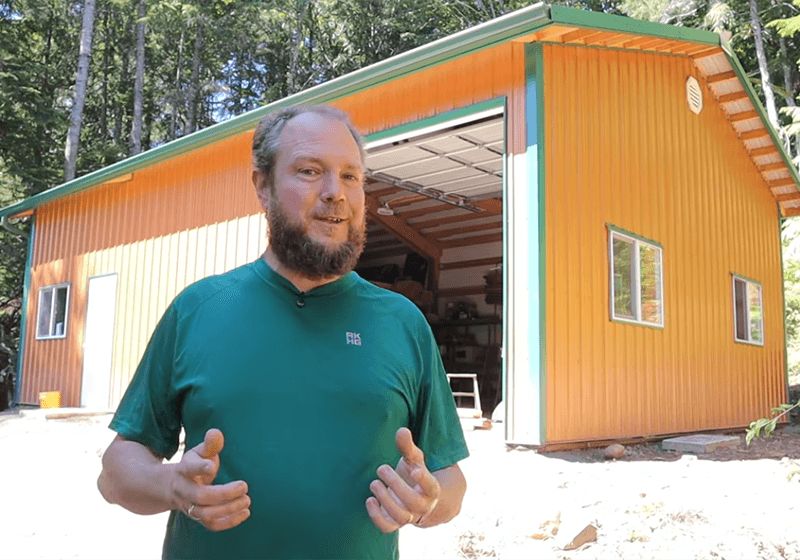
After four years of heating and cooling their off-grid Washington home with a MRCOOL® DIY® Mini-Split, Sara and Ryan of @OneFootOfftheGrid chose MRCOOL again for their new 900-square-foot workshop. They installed a 48K multi-zone MRCOOL DIY® system. This setup includes a 12K indoor unit for the office and a 36K indoor unit for the main shop, giving both spaces independent heating and cooling from one outdoor system.
Since we've been so happy with how it's heated and cooled our house and how simple it was to install, it was a no-brainer when we were trying to figure out how we were going to heat and cool our shop, said Sara.
Project at a Glance
Homeowners: Sara and Ryan, @OneFootOfftheGrid
Location: Hood Canal, Washington
Building: 900-square-foot metal shop
Challenge: Minimal insulation, open ventilation, a separate office/workshop
System: 48K MRCOOL DIY® Multi-Zone
Indoor Units:12K office + 36K main shop space
Primary Goal: Year-round heating and cooling
Previous Experience with MRCOOL®: Four years in their home
Test Result: 85°F to approximately 75°F in 38 minutes; 70°F after 70 minutes
Choosing the Best Way to Heat and Cool a 900-Square-Foot Shop
The shop arrived last September as a bare shell with only basic insulation. Over the past year, the family has turned it into a working space with a large workshop area, a loft, and a separate walled-off office.
Before committing to MRCOOL a second time, they weighed their options. Initially, they explored electric, but decided it was going to be too expensive and inefficient, and a wood or pellet stove would have worked, aside from its inability to cool and its massive footprint within the shop. And finally, they considered and actually purchased a kerosene heater, but it was loud, inefficient, and stinky.
In the end, they chose a 48K multi-zone MRCOOL DIY® system, with a 12K air handler in the office and a 36K air handler in the main shop.
*The 48K system used in this project should not be treated as a general sizing recommendation for a 900-square-foot building. HVAC sizing depends on factors including climate, insulation, ceiling height, air leakage, windows, building materials and intended use. A proper load calculation is the best way to determine system capacity.*
What Is the Best Way to Heat and Cool a Shop?
A ductless mini-split heat pump can be a practical option for workshops because one system provides both heating and air conditioning without requiring ductwork. Multi-zone systems can also independently condition separate areas, such as a workshop and enclosed office. But ultimately, the right solution depends on factors including square footage, insulation, ceiling height, climate, electrical capacity and how the space is used.
How They Installed the MRCOOL DIY Multi-Zone Mini-Split
Sara and Ryan broke the project down into five stages:
1. Wiring the Disconnect Box from the Main Panel
To keep the wiring out of the way, the pair ran the line from the main breaker up the wall and across the shop ceiling to the condenser on the far side of the building. From there, they drilled a hole through the outbuilding and it was ready to go. Ryan and Sara made it look easy, but MRCOOL suggests hiring a licensed electrician for all electrical work.
2. Mounting the Indoor Units
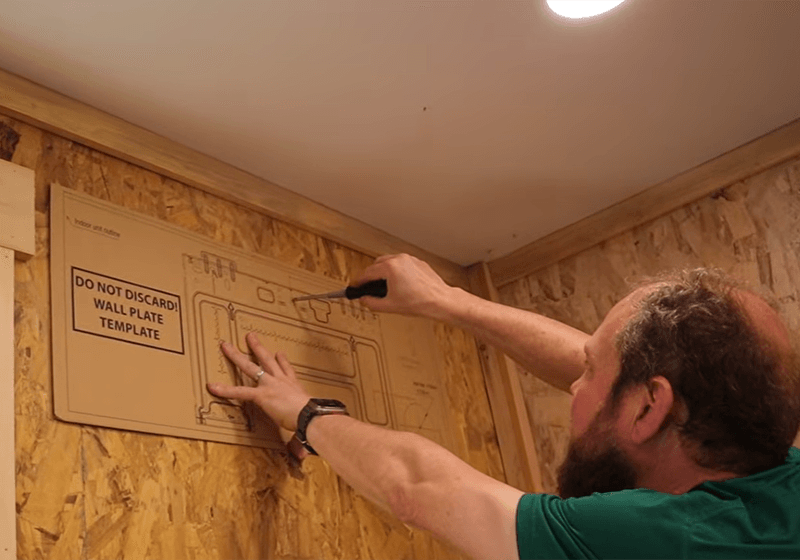
A metal building called for a few adjustments. They trimmed a small piece off the line set guard so it would sit flush against the ridged exterior, then added silicone to hold it in place and keep it sealed against water and air, since there wasn't much wall for it to grip.
They were surprised by how quickly things came together. Sara had a work call to jump on, so they mounted the 12K office unit in about an hour. By the end of the first day, both air handlers were on the wall, including one in a much taller section of the shop.
3. Placing the Outdoor Unit
This time they used the included plastic mounting pad, while their home's condenser sits on a concrete pad. Either works, they said, as long as the condenser sits on level ground.
Installation tip: Plan condenser placement around both airflow and service access. Sara and Ryan found that positioning their outdoor unit directly in front of the disconnect made the electrical work more difficult.
4. Connecting the Refrigerant Lines and Electrical
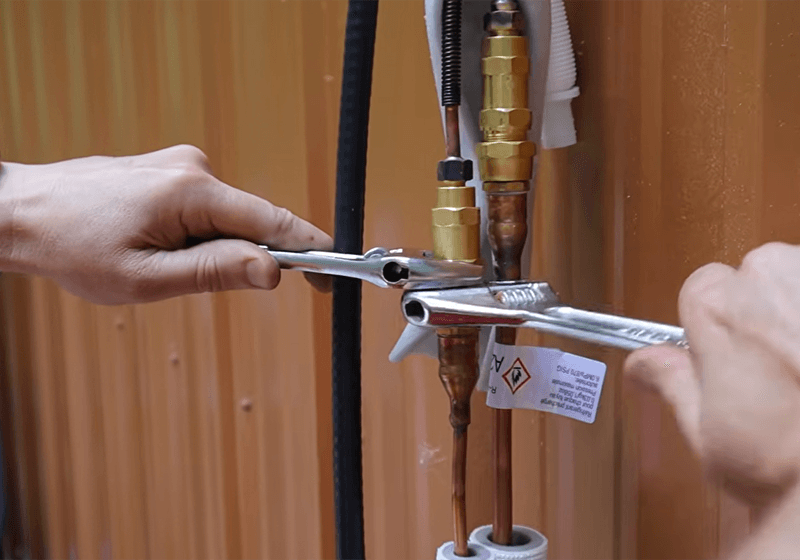
For most homeowners, running the electrical and refrigerant lines is the most intimidating part of the installation, and it's the step we hear the most questions about here at MRCOOL. For Ryan, though, it turned out to be the easiest part of the whole process.
Wiring up the electrical was actually one of the easier parts of this project because each wire is independently labeled with a number that matches up to a number inside the main unit," Ryan said. "It is literally as easy as just matching the numbers together.
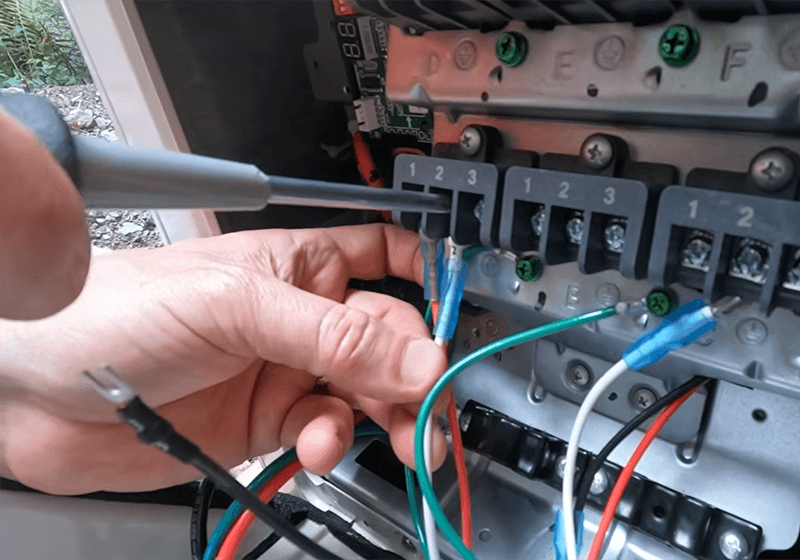
*MRCOOL recommends using a licensed electrician for all electrical work to ensure compliance with national and state codes.*
5. Testing the System
This project also gave Sara and Ryan the chance to put lessons from their first MRCOOL DIY® install to good use. The first time around, they forgot to open the king valves before running their leak test, so the results weren't accurate. As a result, a leak went unnoticed until the system was already up and running, and they had to go back and fix it after the fact.
This time, they carefully followed the testing and startup procedure outlined for their multi-zone system before putting it into operation.
“Don't ask us how we know,” Ryan joked, recalling the mistake they made during their first installation.
*Because refrigerant connection, leak-testing, and startup procedures can vary by system, installers should always follow the instructions provided with their specific MRCOOL unit.*
Controlling the Workshop Mini-Split with the MRCOOL App
The system's USB smart dongle adds Wi-Fi control, voice assistant compatibility, and remote access through the MRCOOL app. It's also easy to install. The family can see and control both their house and shop units in one app, and both Sara and Ryan can keep an eye on things from their own phones.
Being able to connect our units to the MRCOOL app is one of my favorite features about the system. I can't count the number of times I have checked the temperature in the house and turned on the air conditioning when we're coming home from a trip or from a friend's, and the house is at a great temperature when we get home,” said Ryan. “Since these units are going to be in our office space and our shop, I can turn them on from inside the house so that by the time I get out there, it's at my desired temperature.
How Well Did the Mini-Split Cool the 900-Square-Foot Shop?
They knew heating and cooling the shop would be a tough job for any HVAC system. Between its size, the lack of insulation, and the open vents letting in fresh air, the space was bound to be a challenge, so they were eager to see whether the MRCOOL DIY® could overcome these limitations.
During the family's test, the shop started at approximately 85°F while the outdoor temperature was 87°F. Despite the building's minimal insulation, open vents and large loft, they reported that the system lowered the indoor temperature by about 10°F in 38 minutes. After approximately 70 minutes, the shop had reached 70°F.
*Results will vary based on outdoor conditions, insulation, building construction, system sizing and other factors.*
For a family that values doing things themselves, the MRCOOL DIY proved it could handle a tough space and a straightforward install, twice.
Watch their step-by-step installation video and see how @OneFootOffTheGrid is staying comfortable with MRCOOL.
Looking for a heating and cooling solution for your garage, workshop or outbuilding? Explore MRCOOL DIY® Mini-Split systems and find the configuration that fits your space.
Frequently Asked Questions
Can you use a mini-split to heat and cool a workshop?
Yes. A ductless mini-split heat pump can provide both heating and cooling for workshops, garages and other spaces without existing ductwork. MRCOOL offers single-zone and multi-zone mini-split systems, making it possible to condition one large workspace or create separate comfort zones within a shop.
What size mini-split do I need for a 900-square-foot shop?
The right mini-split size for a 900-square-foot shop depends on more than square footage. Insulation, ceiling height, windows, air leakage, climate and how the building is used can all affect the heating and cooling load. For example, MRCOOL lists its 24K DIY® 5th Generation single-zone system for spaces between 750-1,000 square feet under typical conditions, but a poorly insulated shop or one with high ceilings may require a different capacity. A load calculation is the best way to properly size a system for your space.
Can a mini-split heat a poorly insulated shop?
Yes, a mini-split can heat a poorly insulated shop, but poor insulation and air leakage increase the heating and cooling load and can affect efficiency and comfort. Before selecting a system, consider the shop's insulation, ceiling height, doors, windows, ventilation and local climate. Improving insulation and sealing unnecessary air leaks can also help your mini-split maintain the desired temperature more efficiently.
Are mini-splits good for metal buildings?
Mini-splits can be a great option for metal shops, garages and other outbuildings, especially when installing traditional ductwork isn't practical. Because metal buildings can experience significant heat gain and loss, proper system sizing is especially important. Insulation levels, ceiling height, building volume, air leakage and the number and size of doors and windows should all be considered when selecting a mini-split.
Can one mini-split system heat and cool a shop and office?
Yes. A multi-zone mini-split can connect multiple indoor air handlers to a single outdoor condenser, allowing separate areas such as a main workshop and enclosed office to have their own zones. MRCOOL DIY® Multi-Zone systems are available in configurations supporting multiple indoor units, including systems capable of supporting up to six zones.
Can you run a mini-split in an off-grid building?
Yes, provided the off-grid electrical system can supply the voltage, amperage and power required by the specific mini-split. Solar panels, batteries, inverters and other components need to be properly sized for the HVAC load as well as the building's other electrical demands. Always check the electrical requirements of the specific MRCOOL system when planning an off-grid installation.
Do mini-splits provide both heating and air conditioning?
Yes. MRCOOL ductless heat pump mini-splits provide both heating and air conditioning from the same system, allowing you to use your mini-split for year-round comfort rather than installing separate heating and cooling equipment.
Can you install a MRCOOL DIY® Mini-Split yourself?
Yes. The MRCOOL DIY® Mini-Split is specifically designed for homeowner installation. Its patented pre-charged Quick Connect® line sets eliminate the need to vacuum or charge the refrigerant lines during a standard installation, removing one of the biggest barriers to DIY mini-split installation. Always follow the installation manual and applicable building and electrical codes, and MRCOOL recommends using a licensed electrician for electrical work.
Does a MRCOOL Mini-Split have Wi-Fi control?
Many MRCOOL mini-split systems offer Wi-Fi control. Compatible systems can be controlled from a smartphone using the MRCOOL SmartHVAC app, allowing you to adjust temperature and other settings remotely. Select systems also support voice control through Amazon Alexa and Google Assistant. Features vary by model, so check the specifications for your specific system.