
Comfort Made Simple Empowered Homeowners and Contractors Alike
Air conditioning was invented more than a century ago. MRCOOL® decided it was time for an update. Previous arrangements included large outdoor equipment, a licensed specialist with a truck full of gauges, pumps and torches and a homeowner waiting by the phone for an appointment window that might be weeks away.
Most people never questioned it. They expected comfort to come with conditions, and the conditions were extensive. Installation alone could add 40 to 60 percent to the cost of a project. Technicians booked out for weeks at the peak of summer and in the dead of winter. Households that couldn't get central air relied on a rattling window unit in summer and a space heater glowing in the corner during winter. Both burned energy and delivered inconsistent comfort.
Doug and Jason Ingram saw the problem from the inside. After more than a decade working in HVAC, the father-and-son team recognized a widening gap between what homeowners wanted (control, flexibility, practical answers) and what the industry was built to deliver. Their response became a company called MRCOOL.
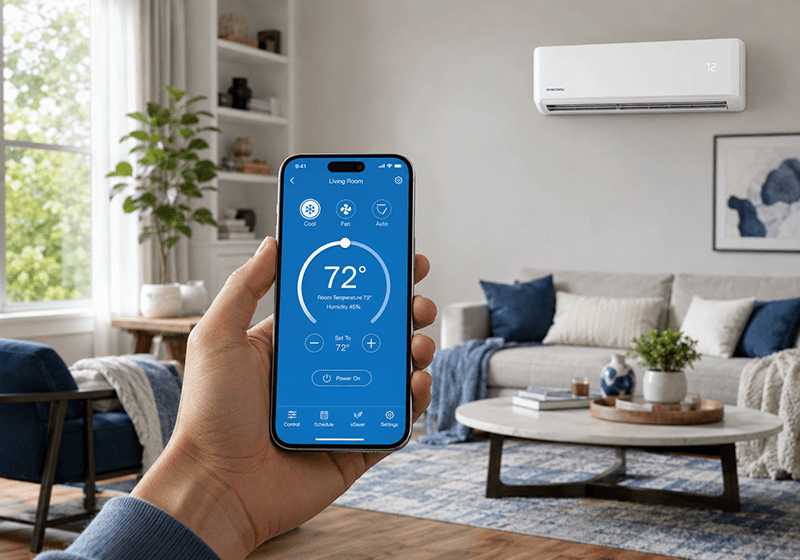
The Kentucky manufacturer combined high-efficiency heating and cooling, building a better heat pump and air conditioner. But its larger achievement was changing who gets to install one. That innovation rippled outward to frustrated homeowners and overbooked contractors alike.
Reinventing Installation Through the DIY® Mini-Split
In 2012 the Ingrams began developing what a future patent would describe as an "apparatus and process for amateur HVAC installation." At the time the phrase could’ve been misinterpreted as reckless. Refrigerant work had belonged exclusively to certified professionals, and for good reason. A traditional install means brazing copper lines, pulling a deep vacuum to clear moisture and air from the system, then charging it with refrigerant using specialized equipment.
MRCOOL's solution arrived in 2014 with the first-generation MRCOOL® DIY® Single Zone Mini-Split. The breakthrough was the line set. Quick Connect® pre-charged line sets come from the factory already containing refrigerant, sealed and ready. Homeowners thread the connections by hand and tighten them with ordinary tools. No vacuum pump. No gauges. No refrigerant handling.
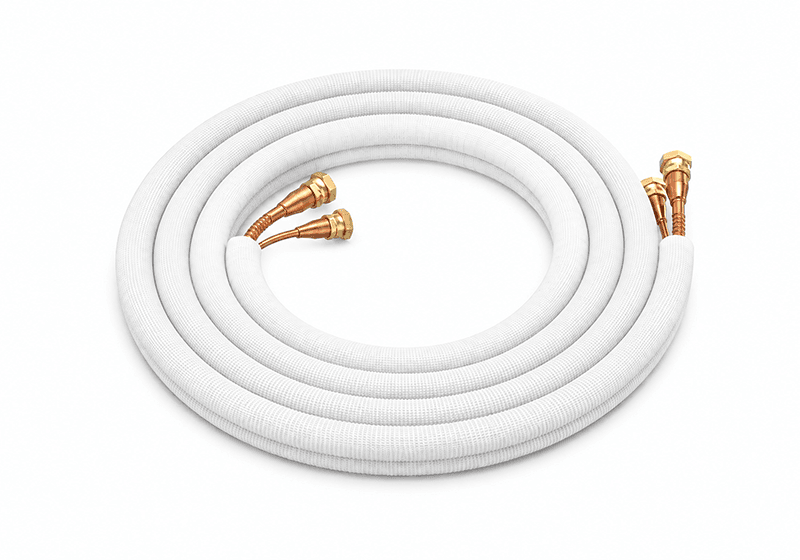
In 2021 the company secured patents on that technology. The DIY® Series became the only ductless mini-split heat pump on the market with patented technology designed specifically for homeowner installation.
The impact was clear. A homeowner with a toolbox could now finish a project in a few hours that previously required a multi-day professional HVAC appointment. Cutting labor costs that can run $5,000 to $16,000 per home offered high-efficiency comfort and independence to people who had been priced out entirely.
Big Comfort With a Smaller Footprint
Anyone who has walked past an old commercial rooftop HVAC unit recognizes the enormity of the systems. For decades residential equipment shared that bulk, crowding side yards and sitting squarely in the sightline from the back porch.
MRCOOL's ductless systems shrank the outdoor presence, so the view of the garden stays a view of the garden. Outside, a compact condenser is tucked against a wall or sits on a small pad. Inside, a slim wall-mounted air handler replaces ductwork snaking through attics and crawlspaces.
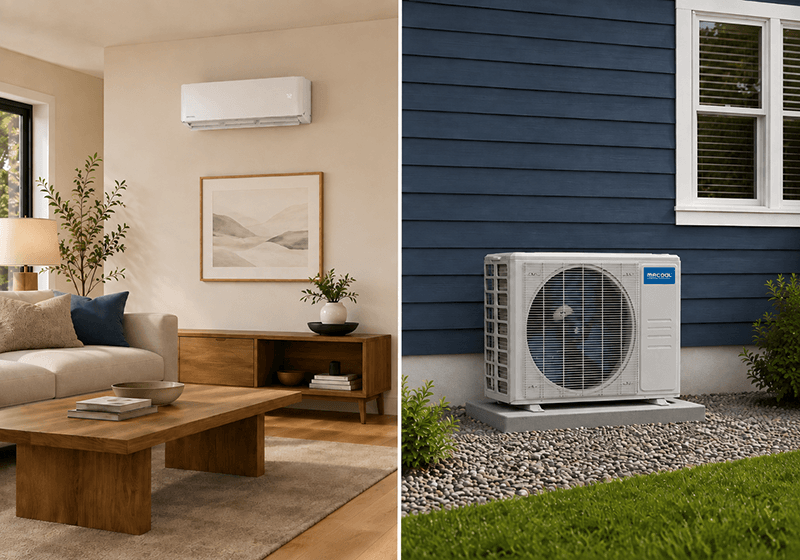
Size was only part of the shift. Over the past decade the brand focused on equipment that runs quieter and communicates with the rest of the house. Smart home integrations appeared in 2022 and supported modern living practices, letting owners adjust temperatures by phone or voice assistant.
Advanced Technology Built for Extreme Conditions
Air conditioning window units can cool a room. Space heaters help heat it. Neither handles both well, and neither does much for a whole room once the outdoor temperature reaches more extreme ranges. A heat pump covers all seasons with a single system, moving heat into the home during winter and pushing it out in the summer.
The engine behind MRCOOL's efficiency is inverter technology. Older compressors operate like a light switch, slamming on at full power and then shutting off, which wastes energy and lets temperatures fluctuate. An inverter compressor speed varies continuously, ramping up or easing off to match the demand of the space. Rooms hold a steadier temperature and you see the difference in your electric bills. According to the U.S. Energy Information Administration, a combination of space heating and air conditioning account for 54 percent of household energy use, so these savings matter.
Professionals avoided heat pump usage in cold climates for many years, but MRCOOL decided to challenge that assumption. It uses cold climate performance engineered to keep delivering heat when outdoor temperatures fall. Select MRCOOL® DIY® heat pumps keep heating at outdoor temperatures as low as -13°F, and the DIY® Hyper Heat models are rated to keep running down to -22°F. For homeowners in northern states, that capability turns a ductless heat pump from a shoulder-season supplement into a primary source of winter warmth.
Environmental responsibility advanced alongside performance. MRCOOL completed a 100% low-GWP transition. Since 2025, the company has offered a new product line with R-454B refrigerant and select R-32 solutions.
Changing the Game for Contractors
Once the DIY® model was well-established, the next step was to test whether the same idea could work on conventional ducted systems. In 2020 MRCOOL launched the Universal® Ducted Split Heat Pump, introducing the pre-charged line set to the equipment professionals install every day.
That move reframed the brand's relationship with the trade. It would be easy to assume homeowner-friendly technology cuts contractors out of the picture, but the opposite happened.
The U.S. Bureau of Labor Statistics projects roughly 40,600 openings for HVAC mechanics and installers will need to be filled every year through 2035. Contractors already feel that squeeze during July heat waves and January cold snaps, when calls stack up and experienced crews are booked solid.
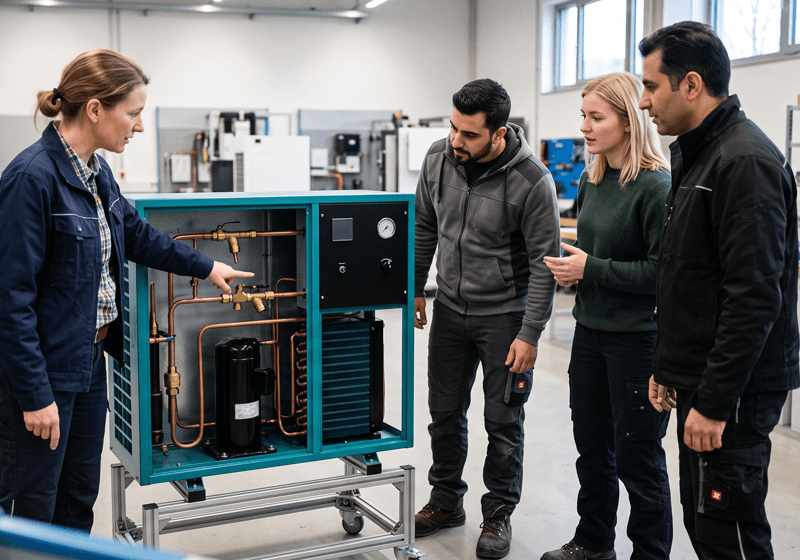
Equipment that removes vacuuming and brazing from the job saves technicians hours on every install. Those hours add up to more completed jobs per week, shorter wait lists for customers and some breathing room for shops that can't hire fast enough.
Technology should not make skill irrelevant," says Jason Ingram, Managing Member of MRCOOL. "When we remove unnecessary steps or design equipment that's easier to understand and install correctly, we're giving technicians more time to focus on the parts of the job where their judgment and experience really matter.
The company backs that view with infrastructure. Its Contractor Fulfillment Program has roughly 885 contractor members. Training partnerships with SUNY Delhi and the Tennessee Colleges of Applied Technology put modern equipment into students' hands before graduation. MRCOOL University supports dealers and franchisees, and franchise locations have multiplied since the first opened in Massachusetts in 2024.
What Comes Next for Comfort
MRCOOL's advancements in the HVAC industry provide modern heating and cooling solutions that ordinary people can afford, install and live with.
That momentum carried into 2026 with a new generation of budget-conscious systems rolling out, led by the patent-pending Compact Refrigeration System for small and mid-sized commercial and residential refrigeration applications. Hybrid and dual-fuel options and an expanded DIY® catalog follow close behind. Smart Home capability keeps improving, and MRCOOL's reach continues expanding from its headquarters in Hickory, Kentucky, to franchise markets across the country.

Air conditioning entered the scene in 1902. A century later, a father and son from western Kentucky shared it with people who never imagined they could have it on their own terms.
Ready for a 21st-century update? Explore MRCOOL® DIY® ductless mini-splits or discover the Universal® Ducted Split Heat Pump to see how pre-charged simplicity can change the way your home stays comfortable.
Frequently Asked Questions
How did MRCOOL change the HVAC industry?
MRCOOL changed the HVAC industry by making it possible for homeowners to install their own heating and cooling systems. The MRCOOL® DIY® Mini-Split launched in 2014 with pre-charged Quick Connect® line sets that remove the need for vacuum pumps, brazing and refrigerant handling. That turned a multi-day professional job into a project most homeowners can finish in a single day or weekend.
Can a homeowner install an MRCOOL® DIY® mini-split?
Yes. The MRCOOL® DIY® Series is designed for homeowner installation with patented Quick Connect® pre-charged line sets. The line sets arrive filled with refrigerant and connect by hand using basic tools, so no EPA refrigerant certification or specialized HVAC equipment is needed.
What is a Quick Connect® pre-charged line set?
A Quick Connect® pre-charged line set is a refrigerant line that comes factory-sealed and already charged with refrigerant. MRCOOL patented the technology in 2021. It removes vacuuming and brazing from installation, which saves time for homeowners and professional HVAC technicians alike.
Do MRCOOL heat pumps work in cold weather?
Yes. MRCOOL low-ambient heat pumps are engineered to provide reliable heating when outdoor temperatures drop. Select MRCOOL® DIY® heat pumps continue heating at outdoor temperatures as low as -13°F, and the DIY® Hyper Heat models are rated to keep running down to -22°F. Inverter compressor technology adjusts output continuously, so the system keeps delivering steady warmth through harsh winters.
How much can a DIY mini-split save on installation costs?
A MRCOOL® DIY® mini-split can save homeowners $5,000 to $16,000 in labor costs per home. Professional installation typically adds 40 to 60 percent to the total cost of a traditional HVAC project.
How do MRCOOL products help HVAC contractors?
MRCOOL products help HVAC contractors by saving hours on every installation. The Universal® Ducted Split Heat Pump brings pre-charged line set technology to traditional ducted systems, so technicians can skip vacuuming and brazing and finish more jobs each week. The MRCOOL® Contractor Fulfillment Program supports roughly 885 contractor members.
What is inverter technology in a heat pump?
Inverter technology lets a heat pump compressor change its speed continuously to match a room's heating or cooling needs. Older compressors cycle between full power and off. Inverter-driven MRCOOL systems hold steadier temperatures and use less energy.
Who founded MRCOOL?
Doug and Jason Ingram, a father-and-son team, founded MRCOOL. After more than a decade in the HVAC industry, they set out to simplify home comfort and launched the first MRCOOL® DIY® Single Zone Mini-Split in 2014. MRCOOL is headquartered in Hickory, Kentucky. Read more.