
Don't ignore a hissing, clanking, or musty air conditioner. When an AC is making strange noises or emitting bad odors, it typically indicates loose internal components, a refrigerant leak, or bacterial growth on damp evaporator coils. Ignoring these warning signs can turn a minor fix into a complete system breakdown during peak summer heat waves.
In this practical guide, we’ll break down exactly what your air conditioner's sounds and smells mean, how you can safely troubleshoot them at home, and when it may be time to upgrade to a more reliable comfort solution.
Why Is My Air Conditioner Making Strange Noises?
An operational cooling system should produce a gentle, consistent hum. If your unit begins grinding, banging, or sizzling, internal damage is actively occurring.
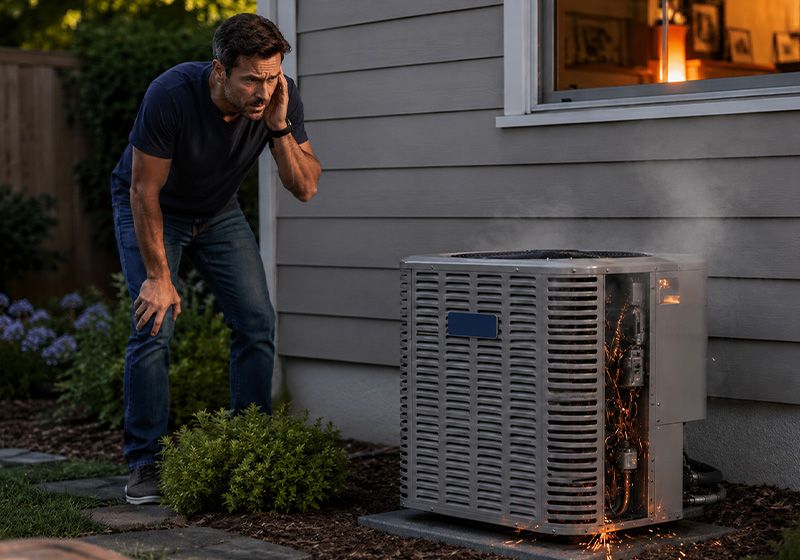
Here is a quick diagnostic checklist of common AC noises and their underlying causes:
- Metal Clanking or Rattling: Typically points to loose blower fan blades, detached motor mounts, or foreign debris rattling inside the condenser housing.
- High-Pitched Squealing or Grinding: Indicates that the motor bearings are worn out.
- Sizzling or Loud Hissing: Almost always signals a high-pressure refrigerant leak (the chemical cooling agent circulating through your system) or a failing compressor valve block.
Note: While a brief clicking sound is completely normal during the startup and shutdown cycles, constant, rapid clicking means an electrical control relay or your smart thermostat connection is failing.
Takeaway: Don’t ignore strange noises coming from your mini split AC, central system, or any other HVAC equipment. Turn off your system and talk to a technician to avoid additional damage that might make repairs even more costly. Noticing these warning signs early can prevent a full system breakdown and keep you from spending money on expensive repairs.
What Causes Bad Odors to Come From My AC Vents?
Unpleasant odors circulating through your home compromise your indoor air quality and point to immediate system issues.
Musty, Sour Smells (Dirty Sock Syndrome)
If the air coming from your vents smells like a locker room, your system is likely suffering from "dirty sock syndrome." This occurs when airborne bacteria colonizes the damp, dark spaces of your evaporator coil (the internal component that absorbs heat and pulls moisture out of your home’s air). This can be prevented with regular maintenance and cleaning, as they are key to keeping your indoor air fresh and healthy.
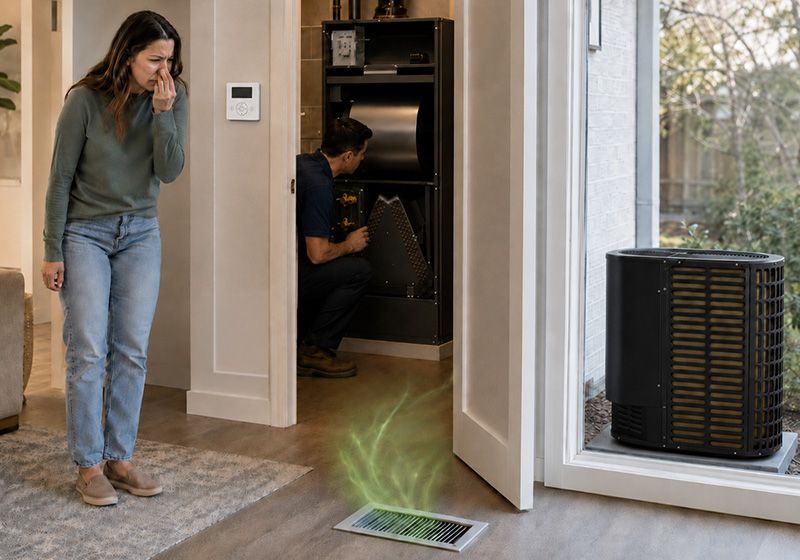
What to do:
Replace your filter and inspect visible ductwork for bacterial growth or obstructions.
Schedule a professional duct cleaning if odors persist.
Electrical Burning Smells
A distinct chemical or electrical burning smell indicates severe overheating. This occurs when electrical wiring begins to melt, circuit boards short out, or the blower fan motor suffers a terminal mechanical jam. If you notice a burning smell, shut off your system at the main breaker board immediately to eliminate fire risks.
Balancing Quick Fixes with Long-Term Comfort
Keeping your air filters clean and ensuring your outdoor condenser unit is free of leaves can prevent many basic operational issues. However, if your cooling system continuously freezes up, leaks refrigerant, or requires frequent, expensive service calls, repeatedly patching it up often costs more than an upgrade. Read our guide on deciding between a replacement or a repair.
If you’re tired of dealing with unpredictable system failures, it may be time to evaluate an efficient alternative. The MRCOOL® DIY® 5th Generation Series Ductless Mini-Split offers homeowners premium, efficient climate control without the heavy labor expenses or unpredictable scheduling of a traditional contractor installation. By leveraging pre-charged Quick Connect® line sets, you can cleanly reclaim your home comfort in a single weekend.
To find the exact system configuration for your home's layout, try our interactive DIY® System Selector, or explore active utility savings over at the MRCOOL® Rebate Center. If you are currently troubleshooting an active technical issue on an existing unit, you can access step-by-step documentation via the MRCOOL® Support Center.
This blog article is part 2 of a 4-part series. Check out Blog #1, Blog #3, and Blog #4 on https://www.mrcool.com/blog.