
There's nothing worse than waking up in the middle of a summer heatwave, checking on your AC unit, and seeing there's a puddle of water on the floor. Or worse, a thick layer of wintry ice coating your condenser.
It feels backwards. How is there ice on my air conditioner when it's 95°F outside?
When your AC starts blowing warm air, leaking water, or freezing solid, it's easy to panic and assume you're going to have to replace your unit. But before you stress, take a deep breath. While some AC issues require a certified HVAC tech, others just need a quick, budget-friendly DIY fix.
Symptoms at a Glance:
Symptom | Most Likely Cause | DIY? |
AC leaking water | Clogged drain line | ✅ |
Ice on AC | Dirty filter | ✅ |
Warm air | Thermostat/filter | ✅ |
Ice returns | Refrigerant leak | ❌ |
Hissing | Refrigerant leak | ❌ |
Water everywhere | Drain pan/pump | ✅ |
Let's break down the three most common and "scariest" AC concerns, what causes them, and how to know when to grab your tool bag versus when to call in the professionals.
1. Why Is My AC Blowing Warm Air?
There's nothing more frustrating than an AC system that runs constantly but only blows lukewarm air on a scorching day.
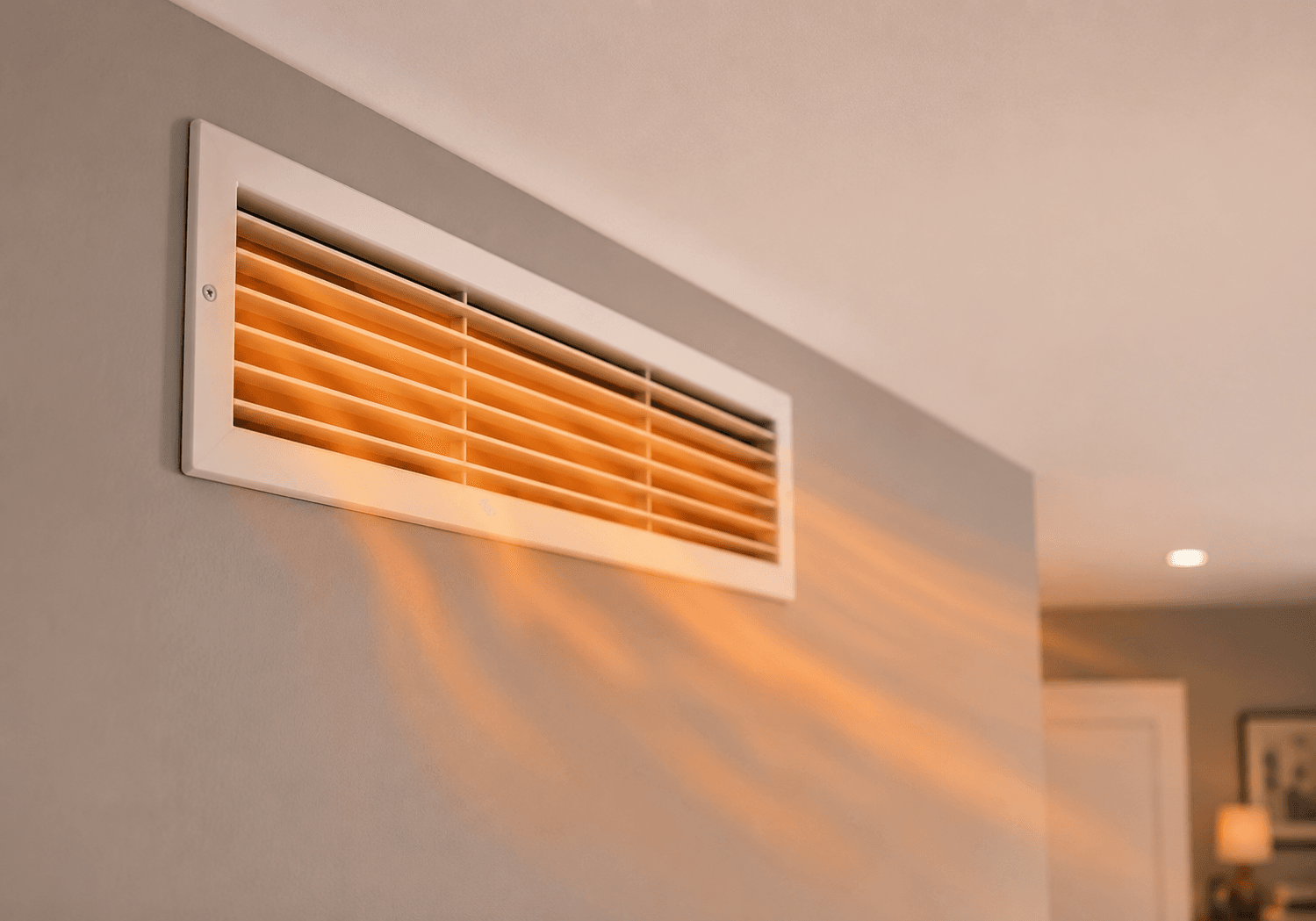
Common Causes
- Quick Fixes:
- A thermostat flipped to the wrong setting
- A dirty air filter
- Professional Fixes:
- A failing compressor
- A refrigerant leak
DIY Fixes
- Check the Thermostat: Make sure it's actually set to "Cool," and the fan is set to "Auto" (not "On," which blows air continuously even when the system isn't cooling).
- Inspect the Air Filter: A clogged filter restricts airflow, preventing your system from cooling properly. Replace it if it looks gray or dusty.
- Examine the Outdoor Unit: Check the condenser outside. Is it buried in weeds, covered in dirt, or coated in ice? Clear away any debris.
Basic maintenance is the first thing to check when your unit underperforms. Routine upkeep extends the life of your equipment, and neglecting it is usually the main cause of problems.
When to Call an HVAC Professional: If you've changed the filter and verified the thermostat settings, but you're still getting warm air, it's likely your compressor has failed or your refrigerant is low. It's time to call a professional.
2. Why Is There Ice on My AC Unit?
If there's no air coming out of the vents or your indoor unit is hidden under a block of ice, you're dealing with a frozen evaporator coil.
What does an Evaporator Coil do?
The evaporator coil is the part of your air conditioner that absorbs heat and humidity from the air inside your home, allowing cool air to circulate through your vents. When airflow is restricted or refrigerant levels are low, the coil can become too cold and freeze over, leading to poor cooling performance and ice buildup.
Common Causes
Your AC doesn't "create" cold, it actually removes heat and moisture from your home's air. If something disrupts that process, the temperature drops below freezing, and the moisture on the coils turns to ice. This is caused by:
- Restricted Airflow: Dirty filters or blocked return vents are the most common causes of frozen evaporator coils.
- Low Refrigerant Levels: Less refrigerant than necessary causes the remaining liquid to expand and drops the coil temperature below freezing.
- A Faulty Blower Fan: The fan isn't able to move enough warm house air over the cold coils.
DIY Fixes
- Thaw it Out: Immediately turn your system OFF from the thermostat. Let it thaw completely. (You can turn the fan setting to "On" to help circulate air and speed it up, but never pick at the ice with sharp tools).
- Restore Airflow: While it thaws, replace your air filters and ensure all supply and return vents throughout your house are completely open.
When to Call an HVAC Professional: If your coils freeze up a second time after you've changed the filter, you have an airflow configuration issue or a refrigerant leak. Do not keep running the system, as frozen coils can cause irreparable damage to your compressor. Call an HVAC tech.
3. Why Is My Air Conditioner Leaking Water?
Leaks are never a good sign, but the type of fluid leaking makes a huge difference.
Water Leaks (The Drain Line)
An AC pulls gallons of water out of the air every day. Normally, this water flows down a condensate drain line. If you see water pooling around your indoor unit, you likely have a clogged drain line, a cracked drain pan, or a faulty condensate pump.
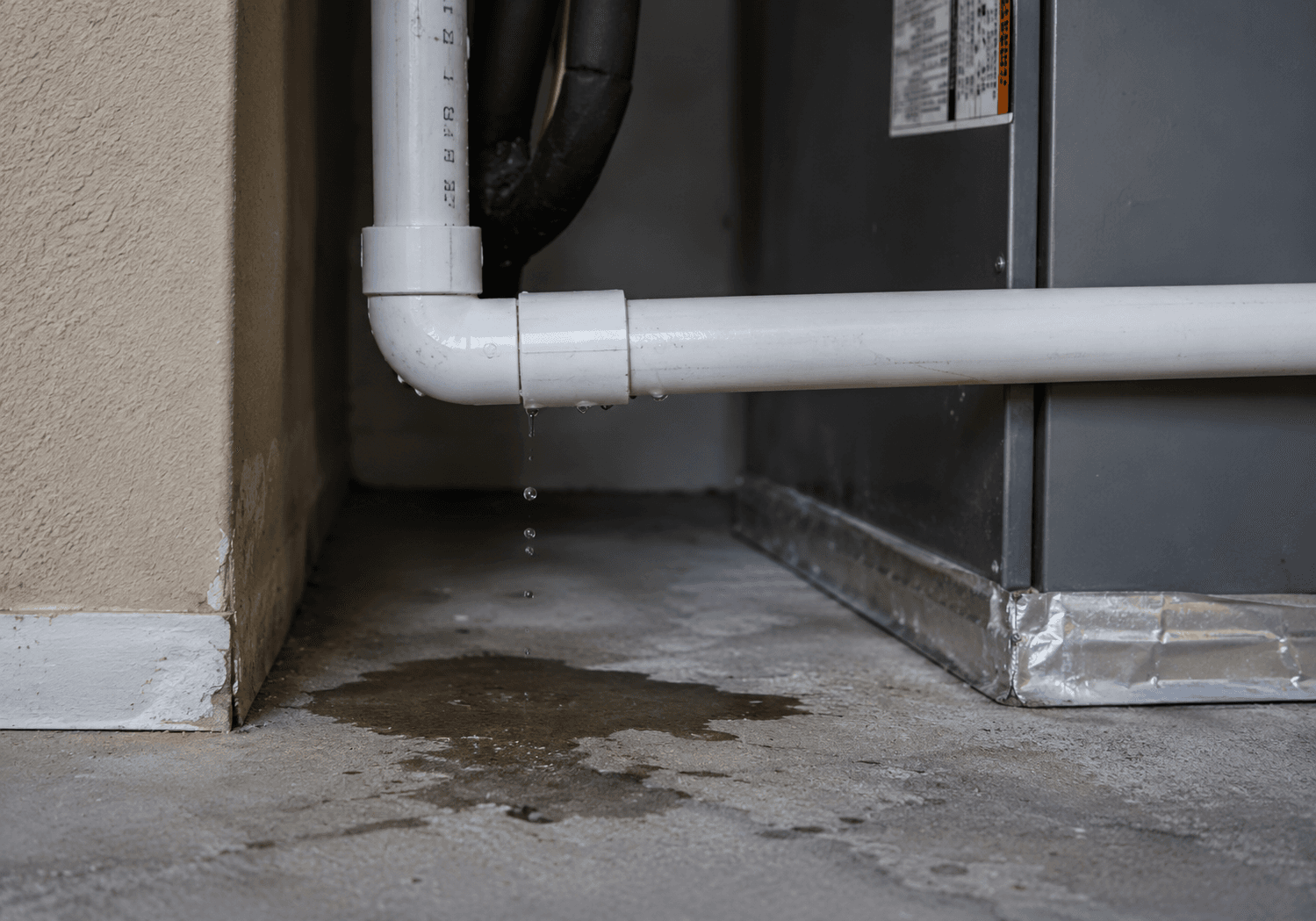
- The Risk: Bacterial growth, musty odors, and expensive water damage to your drywall or floors.
- The Fix: You can often use a wet/dry vac to suck out the clog (usually algae or dust) from the outside end of the condensate drain line.
Refrigerant Leaks (The Chemical Danger)
If your system is leaking refrigerant, it's a much bigger deal. Refrigerant doesn't get "used up" like gas in a car; it circulates in a closed loop. If it's low, you have a leak.
What does Refrigerant do?
Refrigerant is the fluid that circulates through your air conditioning system, absorbing heat from inside your home and releasing it outdoors to keep your living space cool.
- The Risk: Refrigerants are hazardous, strictly regulated chemical substances. Leaks cause your energy bills to skyrocket, destroy your system's efficiency, and can be dangerous to inhale.
- Signs of a Leak: A distinct hissing or bubbling noise near the AC unit, accompanied by ice buildup.
When to Call an HVAC Professional: Water leaks can often be solved with a little DIY ingenuity. Refrigerant leaks, however, require a licensed professional. By law, EPA-certified technicians must handle, capture, and repair refrigerant systems.
The Ultimate DIY vs. Pro Summary
- AC Symptom: Warm Air Blowing
- Likely Cause: Wrong settings or dirty filter
- Can I DIY Fix It?: Yes (Check thermostat & change filter)
- AC Symptom: Ice on the Unit (First Time)
- Likely Cause: Airflow restriction
- Can I DIY Fix It?: Yes (Thaw system & replace filter)
- AC Symptom: Ice on the Unit (Repeatedly)
- Likely Cause: Low refrigerant or fan failure
- Can I DIY Fix It?: No (Call a Professional)
- AC Symptom: Water Puddling Around Unit
- Likely Cause: Clogged condensate drain line
- Can I DIY Fix It?: Yes (Clear line with wet/dry vac)
- AC Symptom: Hissing Noise + No Cooling
- Likely Cause: Refrigerant leak
- Can I DIY Fix It?: No (Shut off system & call a Pro)
- AC Symptom: Warm Air (Filter is Clean)
- Likely Cause: Compressor or Refrigerant issue
- Can I DIY Fix It?: No (Call a Professional)
How to Prevent Your AC From Freezing or Leaking
Keep your unit running efficiently and reliably with these easy cleaning tips:
- Change filters every 1–3 months
- Keep outdoor condenser clean
- Flush drain line yearly
- Schedule annual maintenance
- Keep vents open
- Don't close too many registers
Is it Time to Stop Patching a Sinking Ship?
Most AC leaks and frozen units begin with restricted airflow, dirty filters, or clogged drain lines. Start with the simple fixes first. If ice returns after thawing, you notice hissing, or the system continues blowing warm air, stop running the unit and schedule professional service to help prevent further damage.
Constantly dealing with an older, legacy AC system that keeps freezing up or leaking? Spending hundreds of dollars on repeat technician visits and expensive refrigerant top-offs adds up fast.
It might be time to skip the endless repairs and look at a modern, high-efficiency, easy-to-install DIY replacement system to keep your home cool all summer long without the drama. Visit mrcool.com for more information.
This blog article is part 3 of a 4-part series. Check out Blog #1, Blog #2, and Blog #4 on https://www.mrcool.com/blog.
References
- https://www.directenergy.com/en/learn/home-maintenance/how-to-stop-ac-water-leak
- https://goendlessenergy.com/blog/signs-of-ac-refrigerant-leak-and-dangers/
- https://dolandesignhvac.com/ice-on-outdoor-hvac-unit-causes-fixes/
Frequently Asked Questions
Why is my AC leaking water inside my house?
If your AC is leaking water indoors, the most common cause is a clogged condensate drain line that prevents moisture from draining properly. Other possible causes include a cracked drain pan, a faulty condensate pump, or frozen evaporator coils that create excess water as they thaw.
Why is my AC frozen in the summer?
Your AC can freeze even on the hottest days if airflow is restricted or refrigerant levels are too low. Dirty air filters, blocked vents, failing blower fans, and refrigerant leaks can all cause the evaporator coil to drop below freezing, allowing ice to form.
Can I pour bleach into my AC drain line?
A small amount of diluted bleach can help kill algae and clear minor clogs in some drain lines, but many HVAC manufacturers now recommend using vinegar or a manufacturer-approved drain cleaner instead. Check your owner's manual before using bleach, as it may damage certain components over time.
Should I turn my AC off if it's frozen?
Yes. Turn the cooling system off immediately to allow the ice to melt and prevent damage to the compressor. You can switch the thermostat fan to "On" to help circulate air and speed up the thawing process.
Is a refrigerant leak dangerous?
Yes. Refrigerant leaks reduce your AC's efficiency, increase energy costs, and can damage major system components if left unrepaired. Refrigerants should only be handled by an EPA-certified HVAC technician, as exposure can pose health risks and environmental concerns.
Can a dirty air filter cause ice on my AC?
Absolutely. A clogged air filter restricts airflow across the evaporator coil, causing it to become too cold and freeze over. Replacing your air filter regularly is one of the easiest ways to prevent frozen coils.
Why is my AC leaking but still cooling?
Your AC can still cool while leaking water if the issue is a clogged condensate drain line or a damaged drain pan rather than a cooling problem. Even if the system seems to be working normally, it's important to address the leak quickly to prevent water damage and mold growth.
How much does it cost to repair an AC refrigerant leak?
The cost to repair a refrigerant leak typically ranges from $300 to $1,500 or more, depending on the location and severity of the leak and whether components need to be replaced. If your system uses older refrigerants or has multiple leaks, replacing the unit may be more cost-effective than continued repairs.