Why Efficiency Ratings Matter

HVAC systems are labeled with numbers: SEER2, HSPF2, EER2, COP. These are standardized measurements that indicate how much comfort you'll get for the money spent on electricity. Think of efficiency ratings as the "miles per gallon" of your heating and cooling system. A car rated at 35 MPG will cost you less to drive than one rated at 18 MPG, even if both get you to the same destination. HVAC efficiency works the same way: higher ratings mean lower monthly bills for the same comfort. This guide breaks down what each metric means, why the industry recently updated its testing standards, and how to use these numbers when purchasing your next HVAC system.
The Core Efficiency Metrics
SEER2 (Seasonal Energy Efficiency Ratio 2)
What it measures: How efficiently your system cools over an entire summer season.
How it's calculated: Total cooling output (in BTUs) divided by total electrical energy consumed (in watt-hours) across a simulated typical cooling season.
Why it matters: This is the headline number for cooling efficiency. Higher SEER2 = lower summer electric bills. While national heat pump baselines start at 14.3 SEER2, premium mini-splits routinely achieve 20-23+ SEER2.
Real-world impact: Upgrading from a 10 SEER system to a 20 SEER2 system can cut your cooling energy consumption roughly in half.
HSPF2 (Heating Seasonal Performance Factor 2)
What it measures: How efficiently your heat pump heats over an entire winter season.
How it's calculated: Total heating output (in BTUs) divided by total electrical energy consumed (in watt-hours) across a simulated typical heating season.
Why it matters: This is the critical metric for heat pump buyers, especially in cold climates. Higher HSPF2 = lower winter heating bills. The national baseline is 7.5 HSPF2 (with 8.1+ required in regional/northern tiers), but the premium units achieve 10-14+.
Real-world impact: A system rated at 10 HSPF2 delivers 33% more heating per dollar of electricity than one rated at 7.5 HSPF2.
EER2 (Energy Efficiency Ratio 2)
What it measures: Cooling efficiency at one specific peak condition (95°F outdoor temperature at full load).
How it differs from SEER2: SEER2 averages performance across the whole season (including mild days). EER2 tells you how the system performs on the hottest day of the year when it's working hardest.
Why it matters: If you live in a consistently hot climate (Arizona, Texas, Florida), EER2 is particularly relevant because your system spends more time near peak conditions.
COP (Coefficient of Performance)
What it measures: The instantaneous ratio of useful energy output to electrical energy input at a specific temperature point. It measures how efficiently a heating or cooling system converts energy input into useful heating or cooling output.
How it works: A COP of 3.0 means the system delivers 3 watts of heating (or cooling) for every 1 watt of electricity consumed. It's a multiplier.
Why it matters: COP demonstrates why heat pumps are more efficient than electric resistance heating. A space heater has a COP of 1.0 (100% conversion). A heat pump typically achieves COP of 3–4, meaning it delivers 300–400% more heat for the same electricity. This is because it moves existing heat rather than creating it from scratch.
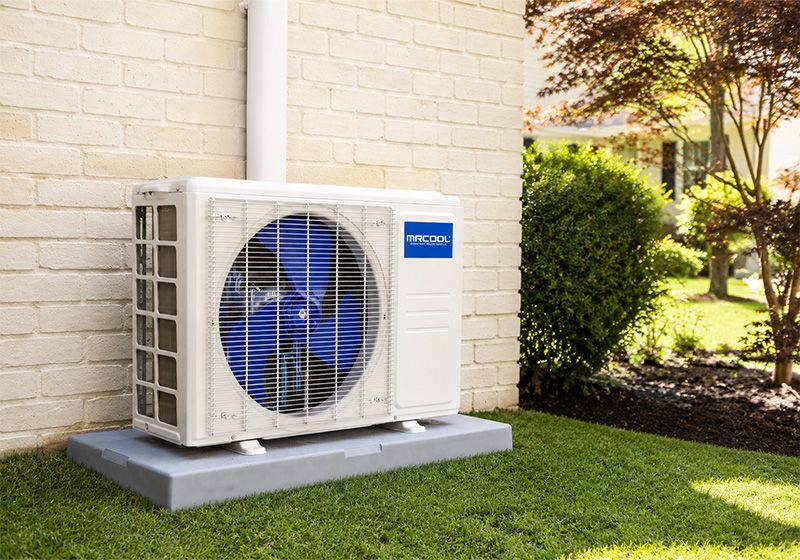
Cold-Climate Performance: COP at Real Winter Temperatures
Published COP ratings are measured at 47°F (8.3°C), a mild fall afternoon. That's not winter. What matters is how your heat pump performs when temperatures drop to 17°F, 5°F, or below zero.
How COP Degrades with Temperature
Every heat pump loses efficiency as outdoor temperatures fall, because there's less ambient heat available to extract. The question is how much:
At 47°F (rated conditions):
- Typical fixed-speed system: COP 3.0–3.5
- Typical inverter system: COP 3.5–4.5
- MRCOOL® Hyper Heat: COP 4.0–4.5
At 17°F:
- Typical fixed-speed system: COP 2.0–2.3
- Typical inverter system: COP 2.5–3.2
- MRCOOL® Hyper Heat: COP 3.0–3.5
At 5°F:
- Typical fixed-speed system: COP 1.5–1.8
- Typical inverter system: COP 2.0–2.5
- MRCOOL® Hyper Heat: COP 2.5–3.0
At -13°F:
- Typical fixed-speed system: System shuts off
- Typical inverter system: COP 1.3–1.8
- MRCOOL® Hyper Heat: COP 2.0+
Why this matters: At 5°F, a basic heat pump might deliver only 1.8x the heat of a space heater. MRCOOL®'s inverter-driven systems maintain 2.5x or higher, meaning you're still getting dramatically more heat per dollar than electric resistance backup, even in extreme cold.
The "balance point" concept: Every heat pump has a temperature at which it can no longer keep up with your home's heat loss. Below that point, supplemental heat kicks in. Higher COP at low temperatures means your balance point is lower, meaning you rely less on expensive backup heating and more on efficient heat pump operation throughout winter.
This is precisely why HSPF2 (which averages performance across an entire heating season including cold snaps) matters more than a single COP measurement for real-world heating cost predictions.
The "balance point" concept: Every heat pump has a temperature at which it can no longer keep up with your home's heat loss. Below that point, supplemental heat kicks in. Higher COP at low temperatures means your balance point is lower, meaning you rely less on expensive backup heating and more on efficient heat pump operation throughout winter.
This is precisely why HSPF2 (which averages performance across an entire heating season including cold snaps) matters more than a single COP measurement for real-world heating cost predictions.
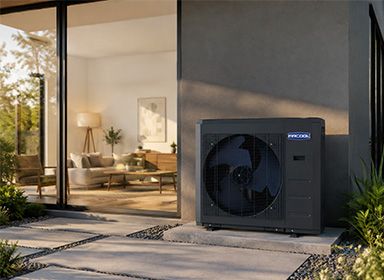
How MRCOOL® Efficiency Compares
MRCOOL® DIY® 5th Generation
Top SEER2
23.6
Top HSPF2
14.0
Refrigerant: R-454B (low-GWP)
DIY Installation: Yes
AHRI Certified: Yes
Mitsubishi Electric
Top SEER2
26.3*
Top HSPF2
14.2*
Refrigerant: R-410A (legacy)
DIY Installation: No
AHRI Certified: Yes
Daikin Aurora
Top SEER2
20.0
Top HSPF2
12.5
Refrigerant: R-32
DIY Installation: No
AHRI Certified: Yes
Goodman
Top SEER2
18.0
Top HSPF2
9.5
Refrigerant: R-410A / R-454B
DIY Installation: No
AHRI Certified: Yes
Pioneer
Top SEER2
17.0
Top HSPF2
9.5
Refrigerant: R-32
DIY Installation: Partial
AHRI Certified: Yes
Senville LETO
Top SEER2
21.2
Top HSPF2
9.5
Refrigerant: R-454B
DIY Installation: Yes
AHRI Certified: Yes
*Mitsubishi's highest-rated unit (MSZ-FS12NA at 26.3 SEER2) uses legacy R-410A refrigerant and has been discontinued. Current-production R-454B models have different ratings.
What Changed: SEER vs. SEER2
In January 2023, the U.S. Department of Energy updated testing procedures for HVAC equipment. Systems are now tested with higher external static pressure (simulating real-world duct resistance) rather than idealized lab conditions.
What this means for you:
- SEER2 numbers are slightly lower than the old SEER numbers for the same equipment (typically 5–10% lower)
- A system rated 20 SEER under old standards might rate 18.5 SEER2 under new standards
- The system didn't get less efficient; the test got more realistic
- When comparing systems, make sure you're comparing SEER2 to SEER2 (not SEER to SEER2)
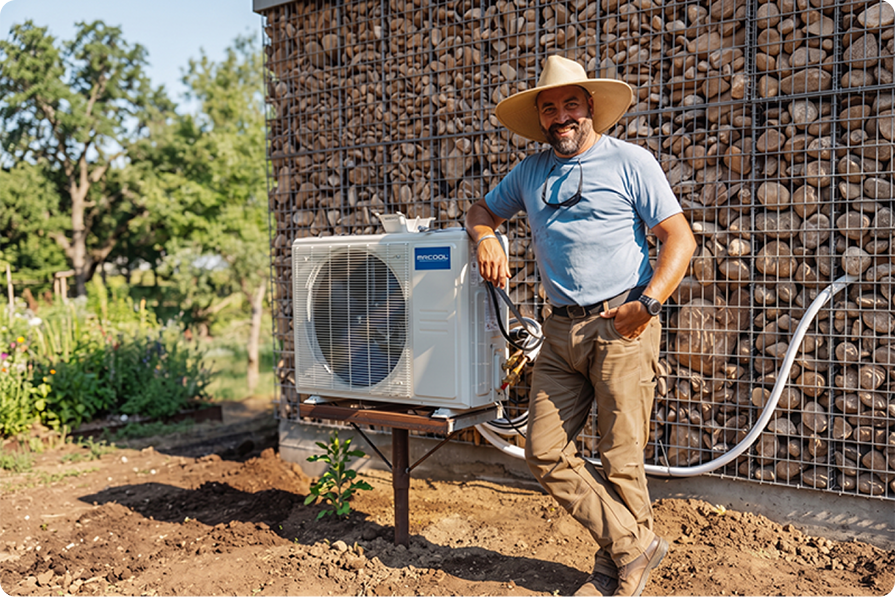
The Refrigerant Transition: Why It Affects Efficiency
Starting in 2025, the EPA's AIM Act requires manufacturers to phase down high-GWP (Global Warming Potential) refrigerants like R-410A. The HVAC industry is transitioning to next-generation options:
R-454B (A2L classification): Slightly flammable, 78% lower GWP than R-410A. This is the DOE/AHRI standard successor for ducted and ductless systems in North America.
R-32 (A2L classification): 68% lower GWP than R-410A. Widely adopted in Asia and Europe; used by Daikin and Pioneer in select U.S. models.
How This Affects Efficiency Numbers
Systems designed for new refrigerants are re-engineered with optimized compressor designs, heat exchangers, and control algorithms. In many cases, R-454B and R-32 systems deliver slightly improved real-world efficiency over their R-410A predecessors at the same price point.
What to Watch for When Comparing Brands
- Some manufacturers still publish their highest ratings from discontinued R-410A models. Always confirm the rating applies to a currently-produced unit.
- AHRI certifications are refrigerant-specific. A rating earned on R-410A does not transfer to an R-454B version of the same unit.
- MRCOOL®'s current lineup is engineered for R-454B from the ground up, not retrofitted, ensuring the rated efficiency reflects what you'll actually experience.
How Inverter Technology Drives Efficiency
The single biggest factor determining real-world efficiency is how the compressor operates.
Traditional (fixed-speed) systems:
- Run at 100% capacity or shut off completely
- Constantly cycle on and off throughout the day
- Each startup draws a massive energy spike
- Temperature swings between 2–4°F above and below your thermostat setting
Inverter-driven (variable-speed) systems:
- Modulate compressor speed from as low as 20% to full capacity
- Run continuously at precisely the speed needed to maintain temperature
- Eliminate startup energy spikes
- Hold temperature within ±0.5°F of your setting
The result: Inverter-driven systems offer 30–50% energy savings over fixed-speed systems providing the same performance levels of cooling and heating. This is why MRCOOL®'s inverter-driven systems consistently achieve the highest SEER2 and HSPF2 ratings in their categories.
For a more technical look into how inverter drives work, check out Inverter Technology Explained.
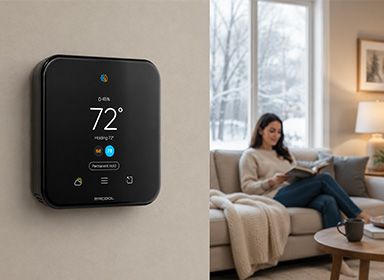
Efficiency in Practice: What Affects Your Energy Bills
Ratings are measured under standardized conditions. Your actual efficiency depends on:
- Proper sizing: An oversized system short-cycles (turns on/off frequently), dramatically reducing efficiency. An undersized system runs constantly without reaching comfort. (Learn more about selecting the right size: BTU Requirements by Square Footage)
- Duct condition: Leaky or uninsulated ducts waste 25–30% of conditioned air before it reaches your rooms. Ductless systems eliminate this loss entirely. (Learn more: Ducted vs Ductless Systems)
- Installation quality: Incorrect refrigerant charge, improper airflow, or poor electrical connections all degrade efficiency. MRCOOL®'s factory-sealed Quick Connect® lines ensure precise refrigerant charge every time. (Learn more: Patented Quick Connect® Line Sets Explained)
- Maintenance: Dirty filters, clogged coils, and debris-blocked outdoor units force the system to work harder, reducing efficiency.
- Climate: Systems perform differently in extreme heat vs. mild conditions. Check both SEER2 (for cooling-dominant climates) and HSPF2 (for heating-dominant climates) based on where you live.
How Efficiency Varies by Climate Zone
The U.S. Department of Energy doesn't apply a single efficiency standard nationwide. Since January 2025, federal minimums are split by region:
Northern Region (DOE Climate Region North):
- Minimum: 15.2 SEER2 / 8.1 HSPF2 for split-system heat pumps Southern/Southwest Region (DOE Climate Region South and Southwest):
- Minimum: 15.2 SEER2 (split systems) / no separate elevated HSPF2 floor in cooling-dominant regions
What this means for your purchase:
If you're in a heating-dominant climate (Midwest, Northeast, Mountain West), HSPF2 is your most financially impactful number. A bump from 8.1 to 10+ HSPF2 can save $400–$800/year in heating costs depending on your square footage and local electricity rates.
If you're in a cooling-dominant climate (Southeast, Southwest, Gulf Coast), prioritize SEER2 and EER2. The difference between 15 SEER2 and 22 SEER2 translates directly to 30%+ lower summer electric bills.
For mixed climates where you both heat and cool significantly, look for systems that score well across both metrics. MRCOOL® inverter-driven systems are engineered to deliver top-tier performance on both sides: up to 23.6 SEER2 for cooling and up to 14 HSPF2 for heating.
Calculating Your Real Energy Savings (With Examples)
Knowing efficiency ratings is useful. Knowing what they mean for your budget is better. Here's how to estimate your annual savings from upgrading:
The Formula
Annual Cooling Savings = Current Annual Cooling Cost × (1 - Old SEER ÷ New SEER2)
Annual Heating Savings = Current Annual Heating Cost × (1 - Old HSPF ÷ New HSPF2)
Note: Calculating savings using SEER vs. SEER2 yields a conservative estimate. Because SEER2 test conditions are stricter, a 22 SEER2 unit performs slightly better than an old 22 SEER unit would have.
Worked Example 1: Cooling-Dominant Home (Houston, TX)
- Current system: 10 SEER (installed 2008)
- New system: MRCOOL® DIY® 5th Gen at 22 SEER2
- Current annual cooling cost: $1,800
- Savings: $1,800 × (1 - 10/22) = $982/year in cooling savings
Worked Example 2: Heating-Dominant Home (Minneapolis, MN)
- Current system: 8 HSPF (installed 2010)
- New system: MRCOOL® at 12 HSPF2
- Current annual heating cost: $2,200
- Savings: $2,200 × (1 - 8/12) = $733/year in heating savings
Worked Example 3: Mixed Climate (Nashville, TN)
- Current system: 13 SEER / 8.5 HSPF
- New system: MRCOOL® at 22 SEER2 / 12 HSPF2
- Cooling savings: $1,100 × (1 - 13/22) = $450/year
- Heating savings: $1,400 × (1 - 8.5/12) = $408/year
- Combined savings: $858/year
Note: These formulas provide conservative estimates. Real savings often exceed projections because inverter-driven systems also reduce demand charges and eliminate the energy spikes from constant cycling that fixed-speed systems produce.
10-Year Cost of Ownership: Why Upfront Price Is Misleading
A $3,000 mini-split and a $1,200 mini-split don't cost what their sticker prices suggest. When you factor in energy consumption, maintenance, and system longevity, the math flips:
Budget system (14–16 SEER2, fixed-speed):
- Purchase + professional install: $3,200–$7,500
- Annual energy cost (average): $1,400
- Expected lifespan: 8–12 years
- 10-year total cost: ~$17,200–$21,500
Premium inverter system (20–23+ SEER2, variable-speed):
- Purchase + DIY install: $3,000–$4,500
- Annual energy cost (average): $750–$900
- Expected lifespan: 15–20 years
- 10-year total cost: ~$10,500–$13,500
The premium system costs $4,000–$8,000+ less over a decade while delivering superior comfort, quieter operation, and more precise temperature control. With MRCOOL®'s DIY® installation eliminating $2,000–$5,000 in professional labor costs, the upfront premium often disappears at the time of purchase.
Efficiency and Rebates
High-efficiency systems often qualify for significant financial incentives:
- Federal tax credits: The Inflation Reduction Act provides up to $2,000 in tax credits for qualifying heat pump installations
- Utility rebates: Many local utilities offer $500–$1,500+ for installing ENERGY STAR-certified heat pumps
- State programs: Additional state-level incentives vary by location
To qualify, systems typically must meet minimum efficiency thresholds (often SEER2 16+ and HSPF2 9+). MRCOOL®'s DIY® and Universal series exceed these thresholds, making many models eligible.
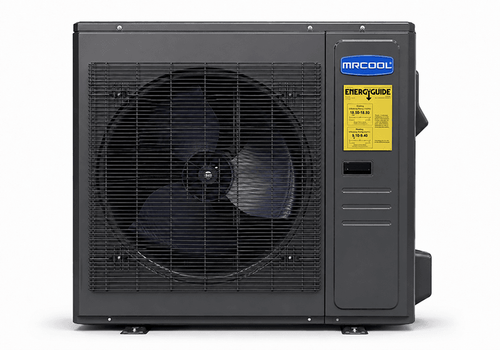
What Is ENERGY STAR Most Efficient?
ENERGY STAR certification means a system meets the EPA's elevated efficiency criteria (above federal minimums). But there's a tier above: ENERGY STAR Most Efficient is an annual designation recognizing the top-performing products in each category.
2025 ENERGY STAR Most Efficient criteria for ductless heat pumps:
- SEER2 ≥ 19.0
- EER2 ≥ 12.0
- HSPF2 ≥ 9.8
- COP at 5°F ≥ 1.75 (cold-climate designation)
Systems carrying this designation represent the top ~5% of efficiency available on the market. MRCOOL® DIY® 5th Generation models exceed every threshold, qualifying for both ENERGY STAR and the Most Efficient designation, which also makes them eligible for the highest available utility rebate tiers.
Frequently Asked Questions
Q: What's a good SEER2 rating?
A: The federal minimum is 15.2 (as of 2025). A rating of 16–18 SEER2 is considered "high efficiency." Ratings above 20 SEER2 are premium. MRCOOL® DIY® 5th Generation systems achieve up to 23.6 SEER2.
Q: Is a higher SEER2 always worth the extra cost?
A: It depends on your climate and usage. In hot climates with high cooling demand (Southeast, Southwest), the energy savings from a higher SEER2 pay back faster. In mild climates with short cooling seasons, the payback period is longer.
Q: Does SEER2 matter for heating?
A: No. SEER2 only measures cooling. For heating efficiency, look at HSPF2 (for seasonal average) or COP (for specific temperature performance). If you're primarily buying a heat pump for winter heating, HSPF2 is your most important number.
Q: Why do mini-splits have higher efficiency ratings than central systems?
A: Two reasons: (1) ductless systems eliminate the 25–30% energy loss from ductwork, and (2) mini-splits almost universally use variable-speed inverter compressors, while many central systems still use less efficient single-stage or two-stage compressors.
Q: How do I calculate my energy savings from upgrading?
A: Rough formula: (Old SEER / New SEER2) = percentage of old energy use. Example: upgrading from 10 SEER to 20 SEER2 means you'll use approximately 50% of your previous cooling energy. If you spent $1,200/year on cooling, expect roughly $600/year after upgrading.
Q: What's a good HSPF2 rating?
A: The federal minimum is 8.1 HSPF2 (as of 2025 in northern regions). A rating of 9.0–10.0 HSPF2 is considered "high efficiency" for heating. Ratings above 11 HSPF2 are premium. For context, MRCOOL® systems achieve up to 14 HSPF2: nearly double the federal minimum, meaning you get nearly twice the heat output for the same electricity cost compared to a baseline system.
Q: What does AHRI certification mean, and why should I care?
A: AHRI (Air-Conditioning, Heating, and Refrigeration Institute) independently tests and verifies manufacturer efficiency claims. An AHRI-certified rating means a third party confirmed the numbers under controlled conditions. Without AHRI certification, a manufacturer's stated SEER2 or HSPF2 is just a claim. Always look for the AHRI Certificate number when comparing systems.
Q: How does refrigerant type affect my efficiency?
A: Newer refrigerants (R-454B, R-32) are being adopted under EPA regulations to replace R-410A. Systems engineered specifically for these new refrigerants (rather than retrofitted) often deliver equal or slightly better efficiency. More importantly, purchasing a system that already uses the new refrigerant means you won't face expensive refrigerant costs for future service, since R-410A prices are rising as supply decreases.
Ready to Compare Efficient Systems?
- Shop MRCOOL® DIY® 5th Generation (up to 23.6 SEER2, 14.0 HSPF2, R-454B)
- Compare options: MRCOOL® Advantage vs. DIY® Series Comparison Guide
- Size your system correctly: BTU Requirements by Square Footage
- Use our DIY® System Selector