
After building an innovative solar-powered greenhouse, creator Jared Capp needed a localized heating solution to turn his drafty airlock into a multi-use retreat.
Looking for an efficient way to heat a greenhouse in winter? Builder and YouTube creator Jared Capp (@BuildWeird) recently installed a MRCOOL® DIY® 5th Generation 18K Mini-Split in the 400-square-foot airlock of his solar-powered greenhouse at Shortgrass Resort in Spearfish, South Dakota.
The ENERGY STAR® Cold Climate Certified ductless heat pump delivers year-round comfort for staff while maintaining the stable temperatures needed for mushroom cultivation, all without the expense of installing central HVAC.
In Spearfish, winter doesn't just knock on the door; it tries to blow it down. While the Black Hills are known for their rugged beauty, the region's bitter cold makes maintaining a controlled growing environment a constant challenge. To combat this, Jared designed the greenhouse's airlock as a thermal buffer to protect the main growing area from freezing outdoor drafts each time someone enters or exits.
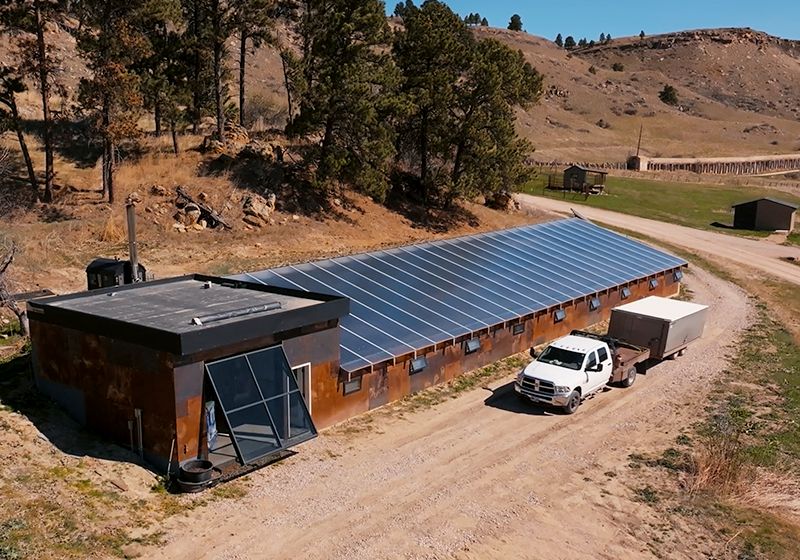
Why a Greenhouse Airlock Needs Dedicated Heating and Cooling
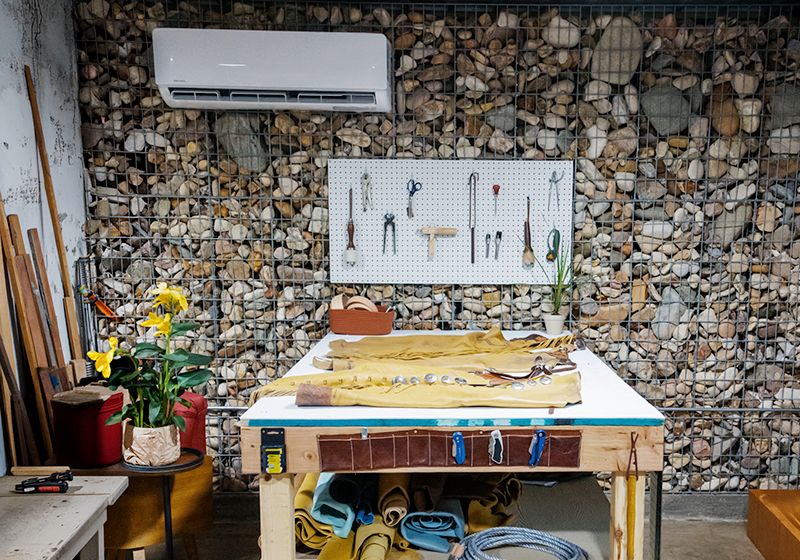
The airlock serves as the staff breakroom, a place to meet, organize, fellowship, and game plan for the day, while also offering a much-needed break from the fluctuating outdoor temperatures. Additionally, it houses a highly sensitive "Martha tent" (a multi-tiered indoor greenhouse) for cultivating fungi. To optimize the growability of these mushrooms, this tent requires a highly controlled environment with automated humidity and fresh air exchange. Because these mushrooms are grown for the resort's farm-to-table restaurant, maintaining a precise temperature range is non-negotiable.
The importance of creating a usable, temperature-stable space was far from lost on Jared, which is why he selected the DIY® ductless heat pump, designed to maintain efficient heating performance even when outdoor temperatures plummet below zero.
Why a DIY® Mini-Split Was the Best Heating Solution
Adding traditional central air to this standalone structure wasn't viable, so Jared installed a MRCOOL® DIY® Mini-Split. He quickly saw its value for specialized spaces; the unit energized the airlock, making it a popular gathering spot for the staff. The team now uses the comfortable environment to recharge during lunch breaks and gather for daily brainstorming sessions, which has noticeably boosted day-to-day productivity. Comfort is key to great work, and this do-it-yourself system provided an incredibly easy, fast solution for conditioning the space.
Able to fit where traditional HVAC can’t, the ductless heat pump is what Jared calls a "surgical solution," offering efficient heating and cooling for specialized spaces without the need for ductwork.
"What I love so much about the mini-split unit is that they’re what I call a 'surgical solution,'" notes Jared. "When we build a brand new, full-sized two-story house, most of the time we put a full (central) HVAC system in it. But a lot of the structures we build are much smaller in size... this is a very 'surgical' way to condition the space.
Why DIY® Made the Cut: Timelines and Rural Realities
When evaluating heating and cooling solutions, Jared selected the ductless heat pump not just for its features, but also for its flexibility. Because he and his family live and work in a highly rural area, scheduling an HVAC technician is notoriously difficult. When you combine that geographical isolation with an ongoing, industry-wide technician shortage, securing timely maintenance becomes a constant obstacle for the crew. Sometimes, a technician has to drive over five hours just to reach a job site, meaning their travel and labor costs can easily exceed the price of the equipment itself.
Furthermore, Jared's frenetic schedule demands flexibility because of his short building season and fickle weather conditions. He noted how much he appreciates being able to take the project into his own hands. The DIY® system works perfectly alongside his unpredictable construction schedule. Whether a build wraps up weeks earlier than expected or encounters extreme weather delays, he has the option to install the unit exactly when it makes sense for him.
Key Features Perfect for @BuildWeird:
- Consistent Temperature Control: The variable-speed inverter dynamically adjusts to maintain steady temperatures, ensuring peak energy efficiency for the solar-powered setup.
- Remote Monitoring: Built-in Wi-Fi connectivity lets Jared monitor temperatures from his smartphone without needing to visit the greenhouse.
- Do-It-Yourself Installation: Designed so that homeowners (or do-it-yourself creators) can handle the job themselves, this unit works perfectly with Jared’s construction schedule and saves him money on professional labor.
- Patented Quick Connect® Line Sets: The pre-charged refrigerant lines mean there’s no need for specialized HVAC tools or refrigerant handling.
- No Ductwork Required: It provides exactly what the multi-use airlock needs: localized, powerful climate control without running ductwork.
How Easy Is It to Install a DIY® Mini-Split?
Jared found the installation process to be smooth, a success he attributes to the straightforward instructions and the Quick Connect® line sets. However, it is safe to say his longstanding background in construction gave him a helpful edge. While his long career as a builder worked to his advantage, he noted it is a realistic do-it-yourself project for the average homeowner. He advises taking one's time and having a second person on hand (to help mount the indoor air handler). As long as a homeowner possesses baseline skills like drilling through a wall, attaching electrical wires, and safely anchoring into a stud, completing the project is completely doable.
Think through your locations, think through your placement, make sure you find the studs," advises Jared. "But don't be scared of it. You can absolutely do it. It might take you a day. It might take you a weekend, and that's totally okay. All the steps are very simple and laid out."
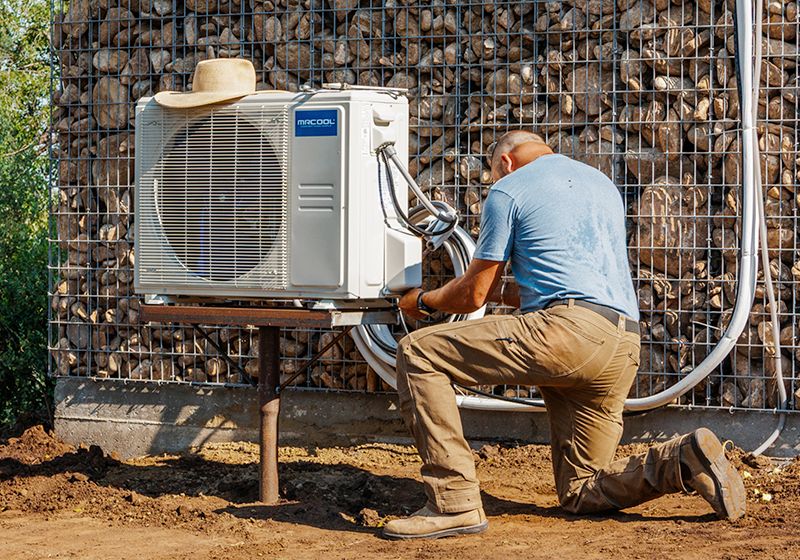
A Complete Look at a High-Tech Warm-Up
Jared’s complete climate-control journey is now live, bringing the @BuildWeird audience along for the entire ride. In his newly published three-part video series, viewers can watch the project unfold from start to finish:
- Part 1: The Unboxing: Get a firsthand look at the components, including the heavy-duty protective line set covers and the main outdoor condenser unit.
- Part 2: The Installation: Watch exactly how the system seamlessly integrates into the greenhouse’s interior without disrupting its unique aesthetic.
- Part 3: Post-Installation Thoughts: Hear Jared's final takeaway on the compact outdoor unit in the video below.
Key Takeaways:
- A ductless mini-split is an effective solution for detached greenhouses and outbuildings.
- Do-it-yourself installation eliminates costly scheduling delays and travel fees in rural areas.
- Inverter technology maintains consistent temperatures for sensitive growing environments.
- Smart controls enable effortless remote monitoring.
- No ductwork is required.
- This system supports year-round comfort for plants and people.
Is a DIY® Mini-Split Right for Your Greenhouse or Detached Building?
From mushroom cultivation and greenhouse climate control to detached workshops and hobby spaces, Jared's project demonstrates how a ductless mini-split can provide efficient, year-round comfort without the cost or complexity of central HVAC. For homeowners looking to condition specialized spaces, a DIY® system offers a practical solution that fits both flexible schedules and unique building designs. If you’re looking for the perfect climate solution for your next project, explore the full lineup at MRCOOL.com.
Frequently Asked Questions
Can a mini-split heat a greenhouse in winter?
Yes. Modern inverter mini-splits continue producing heat in cold temperatures while maintaining consistent indoor conditions for plants, staff, and equipment.
Why use a mini-split instead of central HVAC?
Detached buildings often don't justify the cost of ductwork. A ductless mini-split delivers efficient heating and cooling exactly where it's needed.
Can homeowners install a DIY® mini-split?
MRCOOL DIY® systems are designed for homeowner installation using pre-charged Quick Connect® line sets, though users should follow all installation instructions and local electrical codes.
Is a mini-split good for mushroom cultivation?
Mushrooms require stable environmental conditions. A mini-split helps maintain consistent temperatures while allowing humidity and ventilation systems to work more effectively.
Can a mini-split run year-round?
Yes. A ductless mini-split is designed to provide both heating and cooling, making it a year-round climate control solution for greenhouses, workshops, garages, and other detached spaces. Modern inverter-driven systems automatically adjust their output to maintain consistent indoor temperatures while improving energy efficiency. Cold climate models, such as the MRCOOL® DIY® 5th Generation Mini-Split, are engineered to provide reliable heat even during harsh winter conditions.
What size mini-split is best for a greenhouse?
The best mini-split size for a greenhouse depends on several factors, including the building's square footage, insulation, ceiling height, glazing, local climate, and intended use. While many small greenhouses may require a lower-capacity system, larger or multi-purpose spaces often benefit from higher-capacity units. A proper load calculation is the best way to determine the right size for your application. Refer to the MRCOOL® DIY® System Selector to determine the best fit for your space.