
How to Lower Summer Cooling Bills Without Replacing Your Whole HVAC System
Your utility bill shows up after a week of 90-degree afternoons, and suddenly every thermostat tweak feels expensive. The house is livable. Sort of. But one bedroom still runs hot, and the AC seems to stay on forever.
A high summer cooling bill does not automatically mean you need to replace your whole HVAC system. Many homes use more energy than necessary because of an inefficient schedule, air leaks, dirty filters, too much sun coming in, or one stubborn room that forces the whole house colder than it needs to be. If only one area is causing the problem, a room-by-room fix or smarter controls can make more sense than jumping straight to a full system replacement.
Why cooling bills jump even when the AC still runs
A system can still technically be “working” while also costing too much to operate.
That usually happens when the equipment is fighting the house instead of helping it. Maybe the thermostat is being pushed lower and lower because one upstairs bedroom never catches up. Maybe the afternoon sun turns the living room into a greenhouse. Maybe the filter is dirty, airflow is constrained, or humid air is sneaking in through leaks around doors, windows, and attic areas.
There is also a comfort trap a lot of homeowners fall into, treating the thermostat like a volume knob. Too warm? Turn it way down. Still warm? Turn it down again. That often makes the system run longer without solving the real issue.
One hot or humid room can be especially expensive. If the whole house is already at a decent temperature but one problem space stays uncomfortable, the central system may keep running just to cool that one room. You end up paying to overcool the rest of the house.
Start with the fixes that cost the least
Before you price out new equipment, get the simple stuff under control.
Stop making the system fight your daily schedule
Your cooling schedule has a greater impact than many homeowners realize. If the house is empty for large parts of the day, it usually makes sense to let the temperature rise a bit and bring it back closer to comfort before people get home. A programmable or smart thermostat helps because it removes the guesswork and keeps the routine consistent.
The goal is to stop paying for empty-house comfort.
Make airflow easier before you buy equipment
Low airflow can quietly drive up costs.
Start with the basics:
- Replace or clean the air filter if it’s dirty.
- Make sure supply vents and return grilles are not blocked by rugs, furniture, or curtains.
- Keep the outdoor unit clear of grass, debris, or anything crowding the coil.
- If certain rooms barely get airflow, note it. That is useful information for a future service visit.
If airflow still feels weak after checking out these basic tasks, it may be duct leakage, undersized returns, or a balancing problem. At that point, scheduling an inspection with a qualified HVAC professional may be necessary.
Reduce the heat getting into the house
Sometimes the cheapest cooling upgrade is not in your HVAC system at all.
Afternoon sun, air leaks, and poor attic conditions can force your equipment to work harder than it should. Closing blinds on west-facing windows, weatherstripping a leaky exterior door, or sealing obvious draft points can reduce how hard your existing system has to work.
If the house has a finished attic, a bonus room, or a room over the garage, the insulation and air sealing deserve a closer look. Those spaces are often the source of the problem.
Can a smart thermostat actually lower cooling costs?
Sometimes yes, because it keeps schedules and energy use more consistent.
A smart thermostat helps by doing three things well:
- It maintains a consistent schedule instead of relying on daily guesswork.
- It makes it easier to spot patterns in comfort and energy use.
- It can manage the home more intelligently through features like learning, geofencing, and room-sensor input.
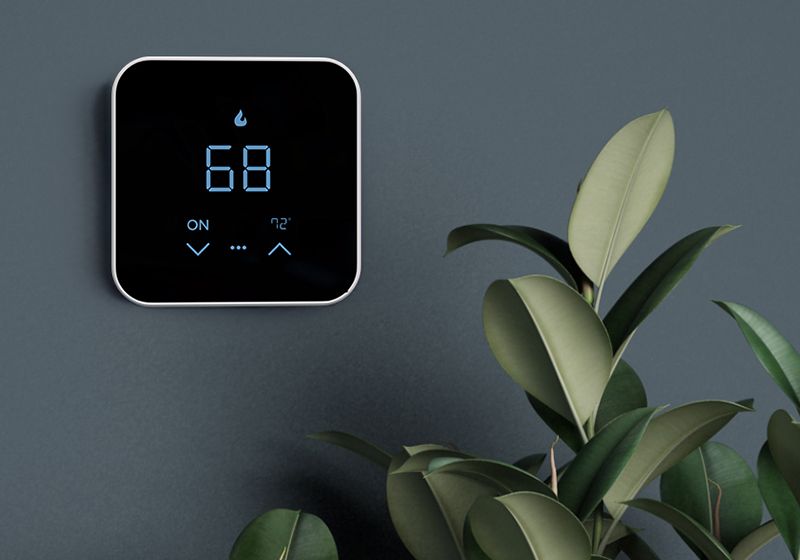
On a compatible 24V ducted system, the MRCOOL® Smart Thermostat allows homeowners to build schedules, monitor usage, and manage comfort through the MRCOOL® Connect app. Remote Room Sensors are optional and can be added to eliminate hot and cold spots in your home. While the thermostat measures the temperature where it's installed, optional Remote Room Sensors help monitor conditions in other spaces for more balanced comfort.
Still, a thermostat cannot fix everything. If the system is oversized, poorly maintained, leaking air, or trying to solve a room-specific problem with whole-house cooling, smarter controls may help, but they will not repair the underlying mismatch.
Why one problem room can make the whole house expensive
This is where many homeowners unknowingly waste energy.
If one office, bedroom, garage conversion, sunroom, or bonus room stays too warm, you may want to drop the whole-house thermostat until that one space finally feels decent. But as a result, the rest of the house gets too cold, the equipment runs longer, and the bill grows.
That’s why zoning matters. Zoning means different parts of the home are controlled separately instead of asking one thermostat to speak for every room.
A ductless mini-split makes the most sense when:
- The rest of the house is mostly comfortable.
- One room is consistently too hot or too cold.
- You do not want to overcool the whole home to fix that one area.
- The space has poor duct coverage or no ductwork at all.
That’s where ductless mini-splits can help with room-by-room comfort, and the MRCOOL® DIY 5th Generation ductless options may be a good fit.

A Quick Decision Guide Before You Spend Big
- Symptom: Bill is high, but most rooms are comfortable
- Start here: Fix the thermostat schedule, filter, and obvious airflow restrictions
- Possible next step: Smart thermostat upgrade or maintenance visit
- Symptom: One room stays hot and drives thermostat changes
- Start here: Check airflow, sun load, and insulation in that room
- Possible next step: Room-specific zoning or adding a ductless mini-split
- Symptom: House feels cool but sticky
- Start here: Check humidity, airflow, filter condition, and runtime patterns
- Possible next step: Humidity-focused service call or room-by-room comfort solution
- Symptom: System runs for long stretches and still struggles
- Start here: Check maintenance basics and heat gain around the home
- Possible next step: Professional evaluation for sizing, equipment, or duct issues
- Symptom: Frequent breakdowns plus high bills
- Start here: Avoid spending more before identifying the underlying issue
- Possible next step: Replacement discussion may be justified
Sometimes replacement really is the answer. A full replacement deserves serious consideration when the system is breaking down repeatedly, the house is uncomfortable everywhere, repair costs are stacking up, or the equipment simply cannot keep up with your home anymore.
It also makes sense when the problem is bigger than one room. If there’s weak performance for the whole house, long runtimes, and poor humidity control, patching around the edges may only buy time.
But if the main issue is one room, one schedule problem, or one comfort mismatch, full replacement can be an expensive overreaction.
What to do this week if your bill is already climbing
- Reset your thermostat habits. Build a realistic Home/Away/Sleep pattern instead of reacting room by room.
- Replace or clean the filter. Cheap. Fast. Worth doing.
- Check vents and returns. Make sure the system can actually move air.
- Cut obvious heat gain. Focus on sun-heavy windows, leaky doors, and the hottest rooms first.
- Notice if one room is driving the whole problem. That points to the best solution.
- Choose the resource that matches your situation. If controls are the issue, start with how to build a smarter cooling schedule. If one room is the issue, look at room-by-room ductless options. If you need troubleshooting help, check out the MRCOOL® support articles and troubleshooting help. If the project is moving toward new equipment, see the current MRCOOL® rebates in your area.
A calm next step usually beats a rushed, expensive one. Especially in July, when a high bill can make every solution feel urgent.
For more information on this topic, check out the following resources.
- ENERGY STAR: Sealing and Insulating Your Home
- ENERGY STAR: Keep Your Cool and Save Your Money This Summer
FAQs
Why is my cooling bill so high even though my AC still works?
Because a working system can still waste energy. Common reasons include inefficient scheduling, dirty filters, weak airflow, air leaks, high sun exposure, humidity problems, or one room forcing the whole house colder than it needs to be.
Should I set the thermostat higher when I leave the house?
Usually, yes, within reason. A slight increase in temperature while the house is empty can reduce unnecessary runtime. Avoid extreme temperature swings, especially if you have a heat pump and want steady recovery.
Do smart thermostats actually save money?
They can help by keeping schedules consistent, reducing guesswork, and showing usage patterns. They work best when the rest of the system is operating efficiently and the settings are used strategically.
Can a mini-split lower cooling costs if only one room is the problem?
Often, yes. If one room is driving the whole-house thermostat lower, a separate ductless system for that space can be more efficient than overcooling the rest of the house.
When is a full HVAC replacement the smarter move?
When comfort is poor across the whole house, repairs keep stacking up, or the existing system can no longer keep up. If the issue is isolated to one room or one control problem, replacement may be more than you need.