
If you’re looking to reduce your carbon footprint and upgrade your home’s comfort system, our eco-friendly heat pumps offer one of the smartest, most sustainable solutions available today. These systems combine energy efficiency, modern technology, and versatile design while helping you contribute to a cleaner, greener future.
In this post, we’ll explain what eco-friendly heat pumps are, how they work, the different types available, the benefits and trade-offs, and why MRCOOL® is the right choice for smart, sustainable HVAC.
What Is an Eco-Friendly Heat Pump?
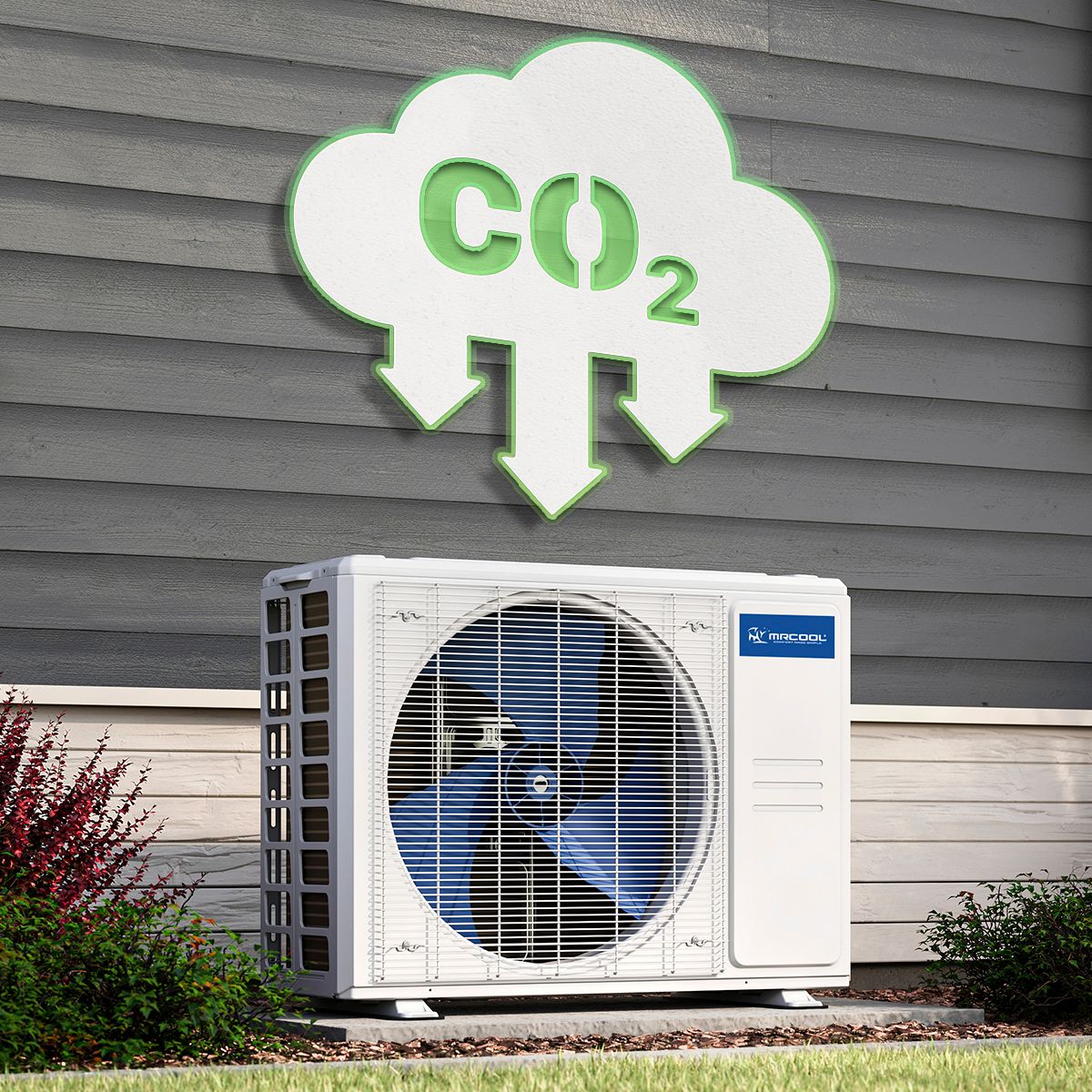
At its core, a heat pump is a device that transfers heat from one place to another. What makes it “eco-friendly” is its energy-efficient operation and reduced reliance on fossil fuels.
Traditional HVAC heating systems burn fuel to create heat. Heat pumps use electricity to move heat already existing in the environment from one location to another. This means they can deliver sustainable heating at ultra high efficiencies compared to combustion technology. Even the most advanced gas furnaces rarely exceed 95% efficiency.
Additionally, eco-friendly heat pumps typically use low Global Warming Potential (GWP) refrigerants and are compatible with renewable energy sources like solar or wind power. Combining renewables with a heat pump can dramatically lower greenhouse gas emissions. This compatibility makes the technology a cornerstone in sustainable homebuilding and green retrofits.
How Do Eco Heat Pumps Work?
You don’t need a degree in mechanical engineering to understand a heat pump. These energy efficient units rely on the same basic cycle as your home refrigerator. For winter heating, they pull heat out of the exterior environment, then pump it indoors to warm your home. In summer, a heat pump reverses the process to expel indoor heat outside, thus keeping your home cool and properly dehumidified.
Many modern heat pumps feature sophisticated inverter technology, which can adjust the compressor speed to meet your heating or cooling needs more precisely. This reduces energy usage and ensures quieter operation and more consistent temperatures.
The ability to both heat and cool with a single system also means less equipment clutter, easier maintenance, and simpler installation. This is especially true for MRCOOL® ductless mini-split systems.
Types of Eco-Friendly Heat Pumps
Not all heat pumps are created equal. Depending on your climate, home layout, and energy goals, one type might be better suited than another. We put together a few handy explanations, so you can narrow down exactly what you need.
Air-Source Heat Pumps (ASHP)
Air-source heat pumps are the most common variety in the United States. They extract heat from outdoor air, even when it’s cold outside. Some modern models can work efficiently in temperatures lower than -5°F.
These are ideal for moderate to cold climates and are conventionally installed.
Geothermal Heat Pumps (Ground-Source)
Geothermal heat pumps utilize the earth’s consistent, stable underground temperature to move heat in and out of your home. They’re incredibly efficient, with very low operating costs, but require upfront investment in ground loop installation.
They’re best suited for new construction or major remodels with yard space for drilling or trenching. However, if you demand the absolute highest efficiency and most sustainable heating, geothermal is ideal.
Ductless Mini-Split Heat Pumps
Designed for spaces without ductwork, new home additions, or room-specific comfort, mini-split systems offer exceptional flexibility. With no need for ducts, you avoid the energy loss associated with central forced air systems, and can get quality environmental control exactly where you want it to be.
MRCOOL® DIY® ductless mini-split systems make it easy for homeowners to install their own high-efficiency units without paying expensive contractor fees. MRCOOL® provides the only true do-it-yourself ductless mini-split system available today.
Hybrid Heat Pumps
Hybrid systems combine an electric heat pump with a gas furnace. When temperatures drop too low for electric-only systems to perform efficiently, the gas furnace kicks in.
These systems are a great compromise for homeowners in far northern climates who still want to cut emissions without sacrificing comfort.
Benefits of Using New Heat Pump Technology
Let’s take a closer look at why so many homeowners are switching to eco heat pumps:
- Energy Efficiency: Moves heat rather than generating it, using up to 75% less energy than many traditional systems.
- Lower Utility Bills: Reduced energy consumption directly translates into monthly savings. Many high efficiency heat pumps pay for themselves over time.
- Year-Round Comfort: Seamlessly handles both heating and cooling in one system. When space is at a premium, getting the most from a single system is ideal.
- Smart Home Integration: Many models work with smartphone apps, voice assistants, and smart thermostats. Monitor your home even when you’re away.
- Low Carbon Footprint: Reduces greenhouse gas emissions over time—especially when paired with solar. Ideal for environmentally conscious homeowners.
- Simple Installation Options: Systems like MRCOOL®’s DIY® ductless units can be self-installed without specialized tools. Patented and dependable.
- Rebates & Tax Credits: Many eco-friendly systems qualify for federal, state, and utility-based incentives to help offset initial costs. Check your local area to discover programs for which you might be qualified.
- Quiet Operation: No more rattling furnaces or loud compressors; inverter-driven systems hum quietly in the background. Set it and forget it.
- Zoned Comfort: Mini-splits allow for room-by-room temperature control, improving comfort and saving energy. This is great for families that can never agree on where to set the thermostat.
Are There Downsides of Having Heat Pumps?
Heat pumps aren’t perfect. The pros definitely far outweigh the cons, but it’s important to set realistic expectations:
- Upfront Costs: Advanced systems, particularly geothermal, come with higher installation prices. These can be mitigated through rebates and lower energy bills over time, but know what you can and can’t afford before you commit.
- Performance in Extreme Cold: Some air-source systems may struggle in sub-zero conditions without auxiliary heat. The lower the exterior temperature drops, the less heat there is in the outside air for the heat pump to get. Some models are better than others in this regard, so make sure you get a model built for your environment.
- Installation Requirements: Geothermal units require drilling or trenching, which may not be practical for every property. Do you live in a dense urban neighborhood with a small front and backyard? Geothermal might not be possible on a compact footprint.
That being said, ongoing innovation is solving many of these challenges. Modern systems, like those from MRCOOL®, are increasingly effective even in demanding environments.
Are Heat Pumps Really Better for the Environment?
In a nutshell, yes! Heat pumps reduce emissions by avoiding combustion and using electricity very efficiently. A typical American household can reduce its heating-related carbon emissions significantly with a heat pump. When powered by renewable energy, the reduction can be astronomical.
And because many MRCOOL® systems use low-GWP refrigerants, they’re aligned with next-generation environmental standards. Pairing a heat pump with rooftop solar is a powerful way to make your home net-zero or even energy positive.
Is a Heat Pump Right for Your Home?

Not sure if a heat pump is the right solution for you? Consider the following:
- Do you want to lower your energy bills?
- Are you concerned about your home’s carbon footprint?
- Is your current HVAC system aging or inefficient?
- Are you building or renovating and want to future-proof your home?
- Do you like the idea of smart, app-controlled climate management?
- Do you live in a region with hot summers and mild winters?
- Do you want a DIY-friendly installation?
- Do you prefer zoned comfort instead of whole-home heating?
If you answered “yes” to several of these, a heat pump is likely a smart investment. And with MRCOOL®’s wide range of ducted, ductless, and multi-zone systems, there’s a setup that fits your lifestyle and budget.
Why MRCOOL® Is a Smart Choice for Eco-Friendly Heating and Cooling
At MRCOOL®, we believe advanced HVAC systems should be accessible, affordable, and environmentally responsible. That’s why we’ve pioneered amateur-friendly, high-efficiency DIY® systems designed with your convenience and finances in mind.
What Sets MRCOOL® Apart?
- DIY Installation: Save thousands by installing your own system with easy-to-follow instructions and pre-charged lines.
- Smart Technology: Our systems are WiFi-compatible and controllable via your smartphone with a custom app.
- Flexible Options: Whether you need a single-zone mini-split or a full central ducted system, MRCOOL® has you covered.
- Exceptional Warranty: Backed by strong product support and reliable warranties.
- Innovation: Constantly improving products to meet modern needs and exceed efficiency standards.
Explore Our Product Line:
- Central Ducted Hyper Heat: Ultra-efficient heat pump systems ideal for cold weather.
- DIY® 5th Generation: Our best-selling ductless solution for self-installation.
- VersaPro®: Efficient comfort and flexible installation options.
- Multi-Zone DIY®: Target comfort in multiple rooms or zones.
Ready to get started? Find a retailer near you or contact us to talk with our expert team.
Final Thoughts
Eco-friendly heat pumps represent more than just smart HVAC. These systems are a key part of a sustainable future. Whether you're replacing an old system, building a new home, or simply want to cut your energy bills while doing right by the planet, a heat pump from MRCOOL® is a reliable, forward-thinking investment.
Let’s work together to build a cleaner, more comfortable future one home at a time.